In Kawempe, Mushrooms Are Becoming a Business
In Kawempe, Mushrooms Are Becoming a Business
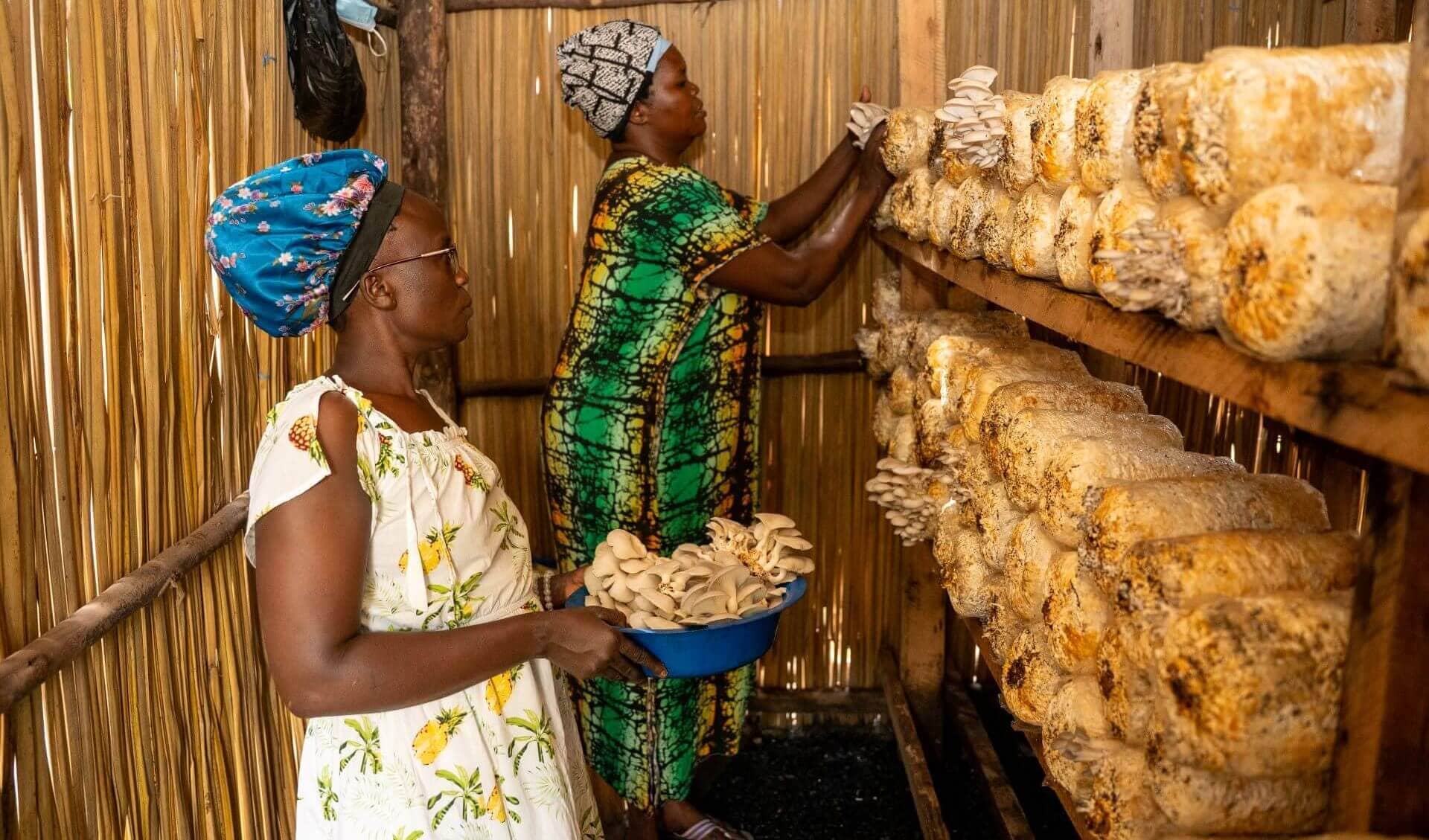
23 June 2026, Kampala. KUUFA members harvests mushrooms. KUUFA makes weekly harvest of about 5 kg of mushroom. Photo: Nathan Ijjo Tibaku for the IRC
How KUUFA members are using mushroom growing to earn income, support families, and strengthen refugee-host community ties in Kawempe. Edward Lodu never imagined mushrooms could help him put food on the table.
For years, the South Sudanese refugee earned a living from a small retail shop. He sold household items like soap and sugar. Then he joined the Kawempe United Urban Farmers Association, known as KUUFA, and learned how to grow mushrooms.
Today, Edward has set up his own mushroom shelter. He says he has earned at least UGX 1 million from mushroom growing. The money helps him buy food and school materials for his children.
“Putting food on the table, that one is very important, even buying scholastic materials for my children,” Edward says. “The shop is there, but mushrooms give me the quick money.”
KUUFA is one of the community groups supported by IRC’s Re:BUiLD program. In 2025, IRC and Kampala Capital City Authority partnered to support 500 urban refugees and vulnerable Ugandans in Kampala. The project helps people earn income through mushroom growing, briquette making, and black soldier fly production.
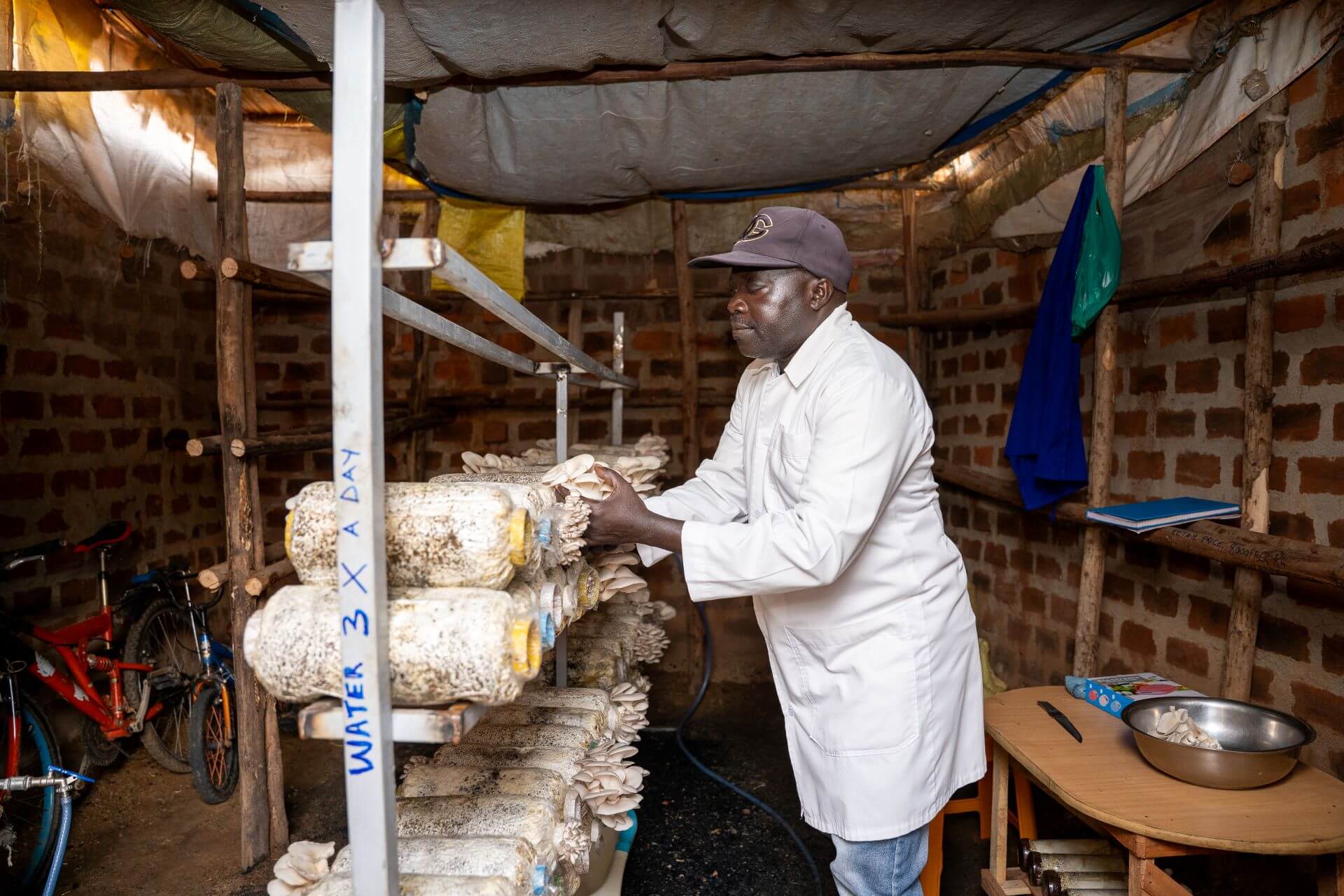
18 August 2026, Kampala. Edward Lodu harvesting harvests mushroom from his garden. Photo: Nathan Ijjo Tibaku for the IRC
For KUUFA, the work started with training from KCCA. After the training, members began growing mushrooms as a group. They now keep records of their harvests, sell to customers, save money, and buy more materials for production.
“We have the skills. Some members are now making their own mushroom gardens, and as a group we are saving and reinvesting,” says Bonsuku Jane Moi, KUUFA’s treasurer.
Bonsuku says the group has produced about 1,000 kilograms of mushrooms since November. They have earned around UGX 1.5 million. The group also saves about UGX 100,000 every month.
For Bonsuku, the records show more than harvests and sales. They show that the group is learning how to run an activity that can keep growing. Some members are now using the skills to grow mushrooms at home. Others are helping the group find customers.
KUUFA has 25 members. Thirteen are refugees, and 12 are Ugandans.
For Victoria Ndawula, a Ugandan member, KUUFA is more than a business. It is a place where people support each other.
She says members stand together during difficult moments, including funerals. When she was sick, group members came to visit her.
Victoria also helps KUUFA find customers. She moves door to door and makes phone calls to market the group’s mushrooms and mushroom gardens.
Through KUUFA, Victoria says she has learned from refugee communities. She admires how refugees organize themselves in groups to support and strengthen one another.
“We are people of the same blood; we need to live, work, and encourage each other. Tomorrow we will be in their countries,” Victoria says.
KUUFA now sells mushrooms and mushroom gardens to individuals and other groups. The group also links customers to members who have mushroom gardens ready for sale. This helps members earn money on their own.
The group wants to grow. Bonsuku says they hope to produce 1,000 mushroom gardens and reach more customers in Kampala and beyond.
But there are still challenges. The group needs more materials to increase production. They also need water tanks to store water during dry periods. A solar dryer would help them dry and preserve mushrooms during the rainy season.
KUUFA’s story is still being written. But its members are not waiting alone. Refugees and Ugandans are working together, finding customers together, saving together, and standing with each other during hard times.
For KUUFA, mushrooms are not only a source of income. They are a way for members to build resilience together, support their families, and face the future with more confidence.