Against All Odds: Zawadi’s Journey from Displacement to Determination
Against All Odds: Zawadi’s Journey from Displacement to Determination
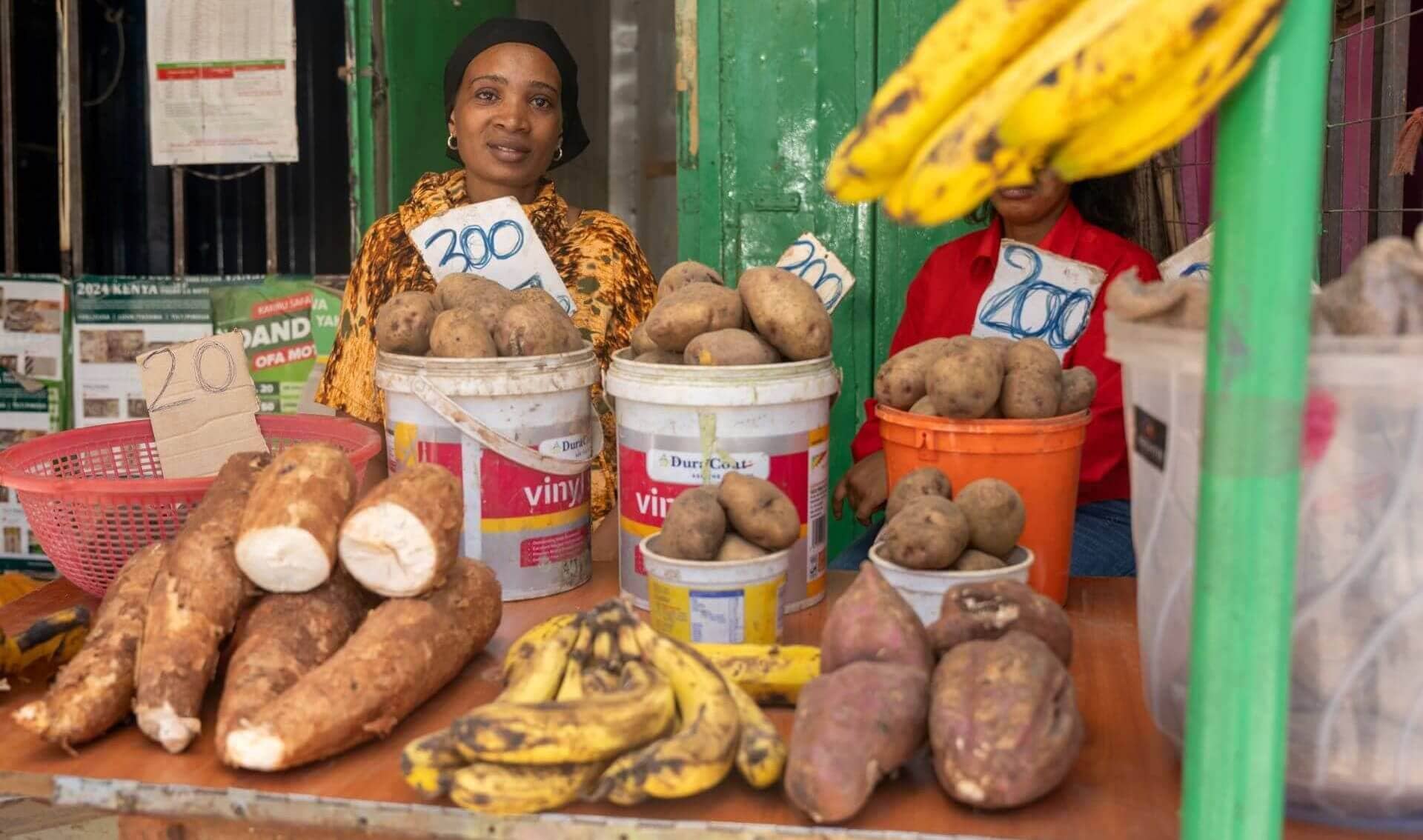
27 June 2025, Nairobi. Aimee Zawadi selling groceries at her shop. Photo: Edgar Otieno for the IRC
When Aimee Zawadi fled the Democratic Republic of Congo at just 16, she carried little more than hope. Arriving in Nairobi in 2016, alone and uncertain, she faced the harsh realities of life as a refugee. Shelter was hard to find, and even harder to keep; she was evicted more than once. But Zawadi refused to give up.
To survive, she started small, selling watermelons on the street. After giving birth to her first child, she moved to Kayole and shifted to selling shoes. Even though she could only sell a few pairs a week, it was a step forward. When sales dropped, Zawadi kept searching for a way to grow.
That opportunity came in 2022, when she joined a savings and loan group through the International Rescue Committee -IRC’s Re:BUiLD program, with funding support from IKEA Foundation. Through this community-driven group, Rangers, Zawadi received financial training and access to capital. She used her share of a Kshs 70,000 group loan to boost her shoe inventory. But the group offered more than just money. When Zawadi was left alone and struggling to pay rent, they stepped in and made sure she didn’t end up on the street.
"There came a time when the girl I lived with disappeared, and I was left alone. The group was kind enough to help me with rent, which allowed me to support myself," she recalls.
In 2024, Zawadi took a bold step, she borrowed Kshs 30,000 from Equity Bank via Re:BUiLD and opened a shoe shop in Gikomba market. But again, sales remained low. Determined not to fail, she repaid the loan and began exploring more profitable ventures.
Spotting an opportunity in the food business, she borrowed another Kshs 60,000, rented a larger shop in Nyama Villa, and launched a restaurant selling fries and grilled chicken. The gamble paid off and Zawadi was earning up to Kshs 3,500 a day. Things were finally looking up.
Then disaster struck. The entire shopping area was demolished. Her business was gone overnight. But even in crisis, Zawadi found support. A neighbor salvaged some of her equipment, and she quickly rented another shop in Bee Center. However, she wasn’t allowed to run a food business there.
Not one to be defeated, Zawadi pivoted once again, this time to selling groceries. Despite lower profits, she earns around Kshs 1,800 a day, enough to keep going. Her dream remains: to reopen her restaurant.
"I couldn’t just let the shop go to waste. I started selling tomatoes, cassava, potatoes—whatever I could, to stay afloat," she says.
Zawadi’s journey is a powerful story of resilience, fueled by community support, financial literacy, and sheer determination. Through the Re:BUiLD program and her savings group, she has not only survived, but rebuilt her life—one business at a time.
And she’s not done yet.