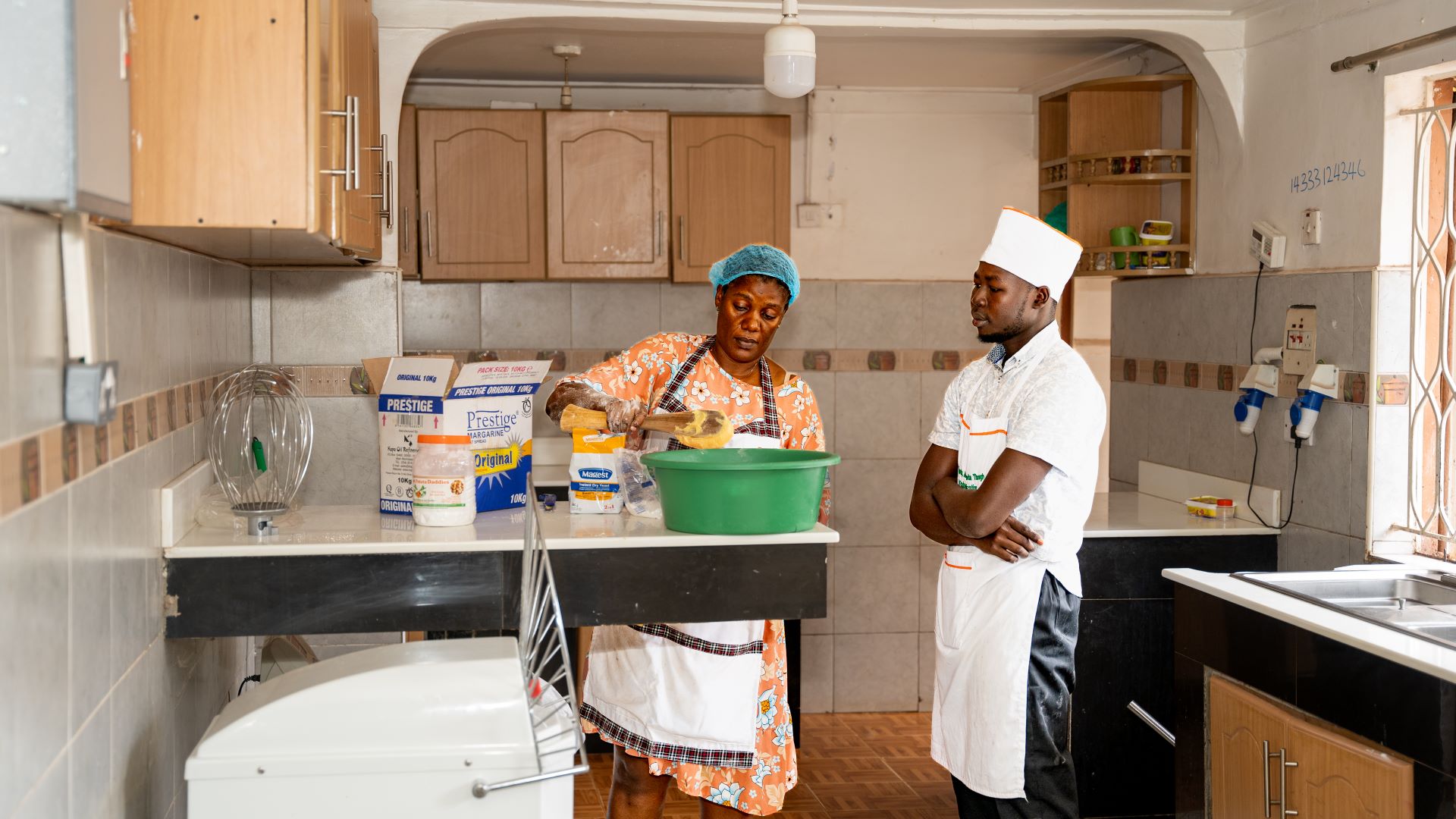
From 2021 to 2025, Re:BUiLD partnered with various private sector actors in Nairobi and Kampala to provide clients with soft skills development and tailored technical training aligned to market demand.
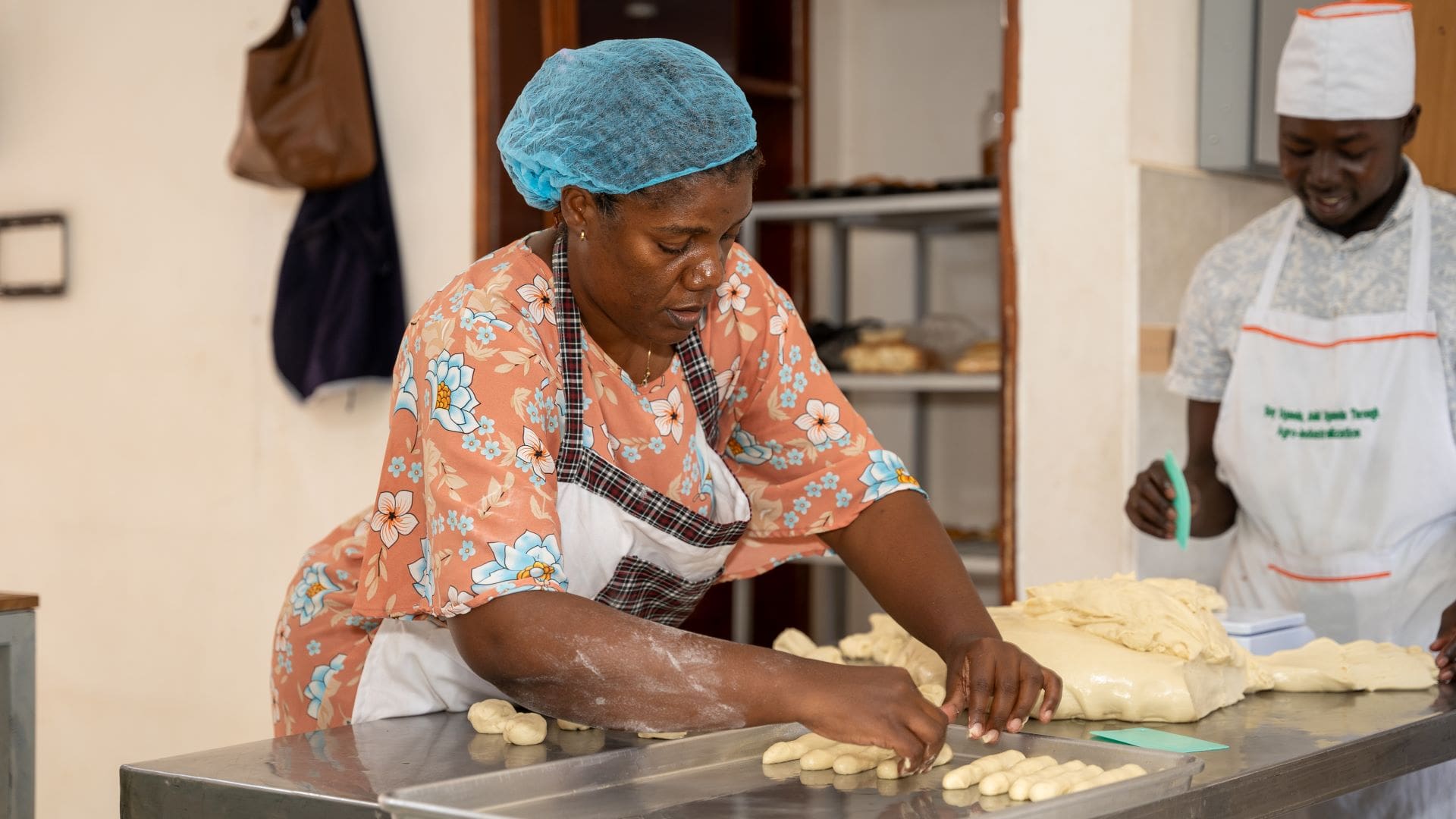 |
The partnership offered clients on-the-job trainings to give them an edge in their pursuit for self-reliance. The clients were seconded by Re:BUiLD for a 3-months on-the-job training. This exposure enhanced the employability of placed clients as they gained valuable experience. Through employer round tables and private sector forums, the program brought together private sector firms, policy players and skilled clients to share experiences on the program. This was also a link for the employers to identify skilled clients for employment while also forming a network for the clients. The program worked with service industries firms like hotels, supermarkets, beauty and cosmetics chains, and associations that brought skilled people together for sharing of learning. |
Progress to date
Since 2021 Re:BUiLD in Nairobi partnered with 16 private sector employers, consisting of small and medium-sized enterprises. By December 2025, a total of 473 clients (292 female, 181 male) were placed as apprentices with local businesses across sectors including beauty/cosmetics, textiles, food service, engineering, health care, and administration in Nairobi. These 3-month placements were facilitated through Memoranda of Understanding with private companies such as Kenya Textile firms, supermarkets (Coolmart, Tasya Mart), training institutes (Mahanaim Educational), hospitality venues (Grace House Resort, Jari Inn Bistro), media and manufacturing firms which agreed to mentor and train the interns. In Kampala, 121 refugees and 353 host community members were placed as apprentices. According to the wage employment survey results, 55% of these clients gained wage employment, with 20% securing formal salaried positions and 35% engaging in self-employment.
In Kampala, by December 2025, a total of 170 clients (114 female, 56 male) received apprenticeship services, being trained in trades like welding, mechanics, tailoring, and salon work interned with local artisans and businesses under supervision for several months, including 70 refugees and 100 host community members. While apprenticeships strengthened technical capacity, complementary support was often required to secure sustained wage employment.
To support those pursuing self-employment after apprenticeships, Re:BUiLD also provided a limited number of start-up kits and micro grants. For example, in Kampala, 87 female and 36 male, 66 host community members and 59 refugees received grants to buy tools/equipment for trades learned. A post-distribution monitoring found most had utilized the funds to launch or expand small enterprises.
The details are summarized in the table below:
| Kind of Employment (% Employed) | Nairobi | Kampala |
| Casual Labour | 31% | 18% |
| Other work | 6% | 1% |
| Paid volunteer work | 2% | 3% |
| Salaried Job | 20% | 28% |
| Seasonal Job | 6% | 5% |
| Self Employment | 35% | 45% |
Data source: Re:BUiLD Wage Employment survey as of December 2025