Overview
The International Rescue Committee’s Refugees in East Africa: Boosting Urban Innovations for Livelihoods Development (Re:BUiLD) program, in partnership with Innovations for Poverty Action (IPA), the World Bank, and other partners, will convene the second Evidence to Policy Research and Policy Symposium in November 2026.
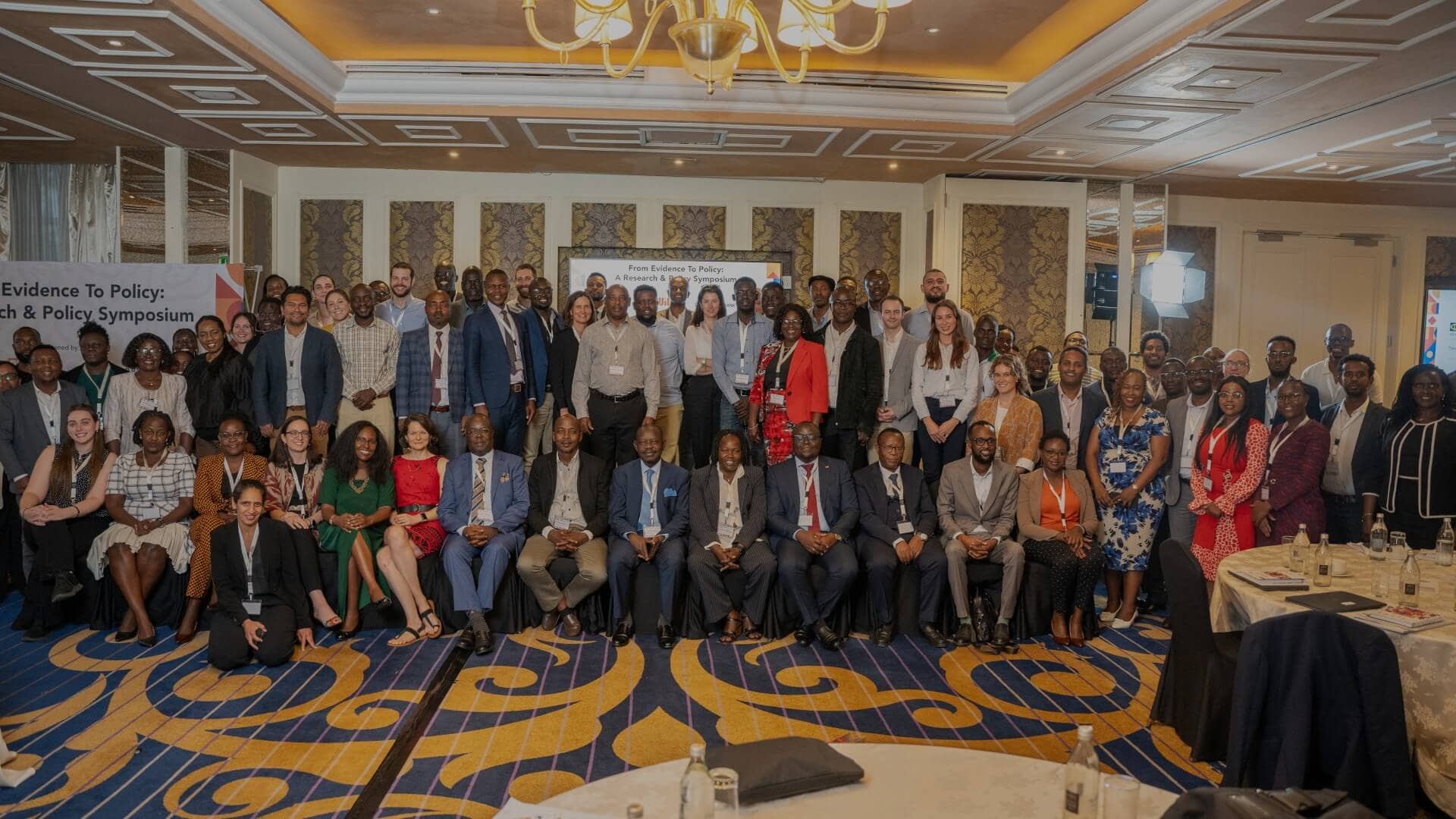
Building on the momentum and outcomes of the 2024 symposium, the 2026 convening will bring together researchers, policymakers, refugees, practitioners, and donors to examine emerging evidence and translate it into actionable policy solutions that strengthen the economic inclusion of refugees and host communities.
The symposium will maintain a primary focus on Kenya, Uganda, and Ethiopia, while welcoming selected contributions from across the broader East Africa region to enrich comparative insights and strengthen regional dialogue on refugee economic inclusion.
Symposium Details
-
Dates: 11 – 12th November 2026
-
Location: Nairobi, Kenya.
-
Format: Two-day, in-person symposium
The Symposium is co-convened and supported by the IKEA Foundation, the Hilton Foundation, the World Bank, UNHCR, the Intergovernmental Authority on Development (IGAD), Innovations for Poverty Action (IPA), the International Rescue Committee (IRC), Nairobi City County Government (NCCG), the Office of the Prime Minister of the Republic of Uganda (OPM), Kampala Capital City Authority (KCCA), the Refugees and Returnees Service (RRS) in the Republic of Ethiopia, and the Department of Refugee Services (DRS) in the Republic of Kenya.
Thematic Areas
The 2026 Evidence to Policy Symposium focuses on the following thematic areas:
1. Financial Inclusion and Micro-Enterprises
Topics include (but are not limited to):
-
Access to savings, credit, insurance, and digital financial services
-
Business formalization and regulatory compliance
-
Fintech, mobile money, and digital payments
-
Know-Your-Customer (KYC) and legal identity frameworks
-
Enabling environments for small and micro-enterprises
2. Access to Jobs, Labor Market Inclusion and Skills Development
Topics include (but are not limited to):
-
Work authorization and legal access to employment
-
Skills recognition, certification, and portability
-
Alignment of training systems with labor market demand
-
Employer incentives and hiring barriers
-
Urban employment, informality, and labor absorption
-
Gender and social barriers to labor force participation
Types of Evidence
The 2026 Evidence to Policy Symposium invited a broad range of rigorous, transparent, and policy-relevant evidence and was not limited to randomized controlled trials. Submissions included:
-
Experimental and quasi-experimental studies (including RCTs)
-
Quantitative or qualitative empirical research
-
Secondary data analysis, structured evidence reviews, and meta analyses
-
Implementation and operational learning
-
Program evaluations (including non-experimental)
-
Practice-based case studies and policy pilots
Contributors were asked to clearly articulate:
-
The research or learning question
-
Methods or learning approach
-
Key findings or insights
-
Implications for policy, practice, and future research
Across all types of evidence, the Symposium Technical Committee is assessing submissions based on methodological rigor, transparency, and their potential to inform policy and practice. For implementation and operational learning, case studies, and policy pilots, submissions are also being reviewed for reflections on what worked, what did not, and the lessons learned.
The symposium encouraged submissions from individuals with lived experience of displacement, as well as researchers and practitioners based in the East African region. Particular emphasis was placed on refugee-led and locally led research that reflects the realities and priorities of those most directly affected.
Submission Status
The Call for Papers and Abstracts for the 2026 Evidence to Policy Symposium closed on 30 June 2026.
We sincerely thank everyone who submitted papers and extended abstracts. We received a strong range and high volume of submissions from researchers, practitioners, policymakers, and individuals with lived experience across the region and beyond.
The Symposium Technical Committee is currently reviewing all submissions.
Thank you for your interest in contributing to the symposium. We look forward to welcoming selected presenters to Nairobi in November 2026.
Review and Selection Process
All submitted papers and abstracts are currently undergoing a technical review led by the Symposium Technical Committee. Submissions are being assessed based on:
-
Relevance to symposium themes
-
Methodological clarity or robustness of learning approach
-
Innovation and contribution to existing evidence
-
Strength of policy relevance and applicability
Authors will receive notification of the review outcome by 14th September 2026..
Important Dates
-
Call for Papers opened: 27th April 2026
-
Submission deadline: 30th June 2026 (closed)
-
Notification of selected papers by:14th September 2026
-
Symposium dates: 11 – 12th November 2026
Participation
Authors of selected papers are expected to present in person at the symposium in Nairobi. Limited support for participation may be available, subject to confirmation. Please note that limited logistical support (travel and accommodation) is available and will be prioritized for a selection of presenters, with consideration given to regional representation and diverse professional backgrounds. Applicants are therefore encouraged to indicate if they can self-sponsor or obtain support from their institutions. This will help ensure equitable allocation of available resources.
Researchers presenting accepted submissions will be encouraged to distill their study rationale, findings, and policy recommendations in a 10 – 15 minute maximum presentation. The majority of the audience will be policymakers from Uganda, Kenya, and Ethiopia, as well as humanitarian practitioners and donors who are eager to incorporate research findings into their decision-making. As such, we advise that selected presentations not dive too deeply into methodological nuances when unnecessary to communicating the important results and implications from the research, and that presentations provide these decision-makers with clear calls to action.
More Information
For inquiries, contact: info.rebuild@rescue.org (subject line: 2026 Research and Policy Symposium).
Program
To be updated.
Speaker Sections
To be updated.