Partnering For Sustainability: Re:BUiLD And KCCA Driving Inclusive Livelihood Solutions
Partnering For Sustainability: Re:BUiLD And KCCA Driving Inclusive Livelihood Solutions
Partnering For Sustainability: Re:BUiLD And KCCA Driving Inclusive Livelihood Solutions

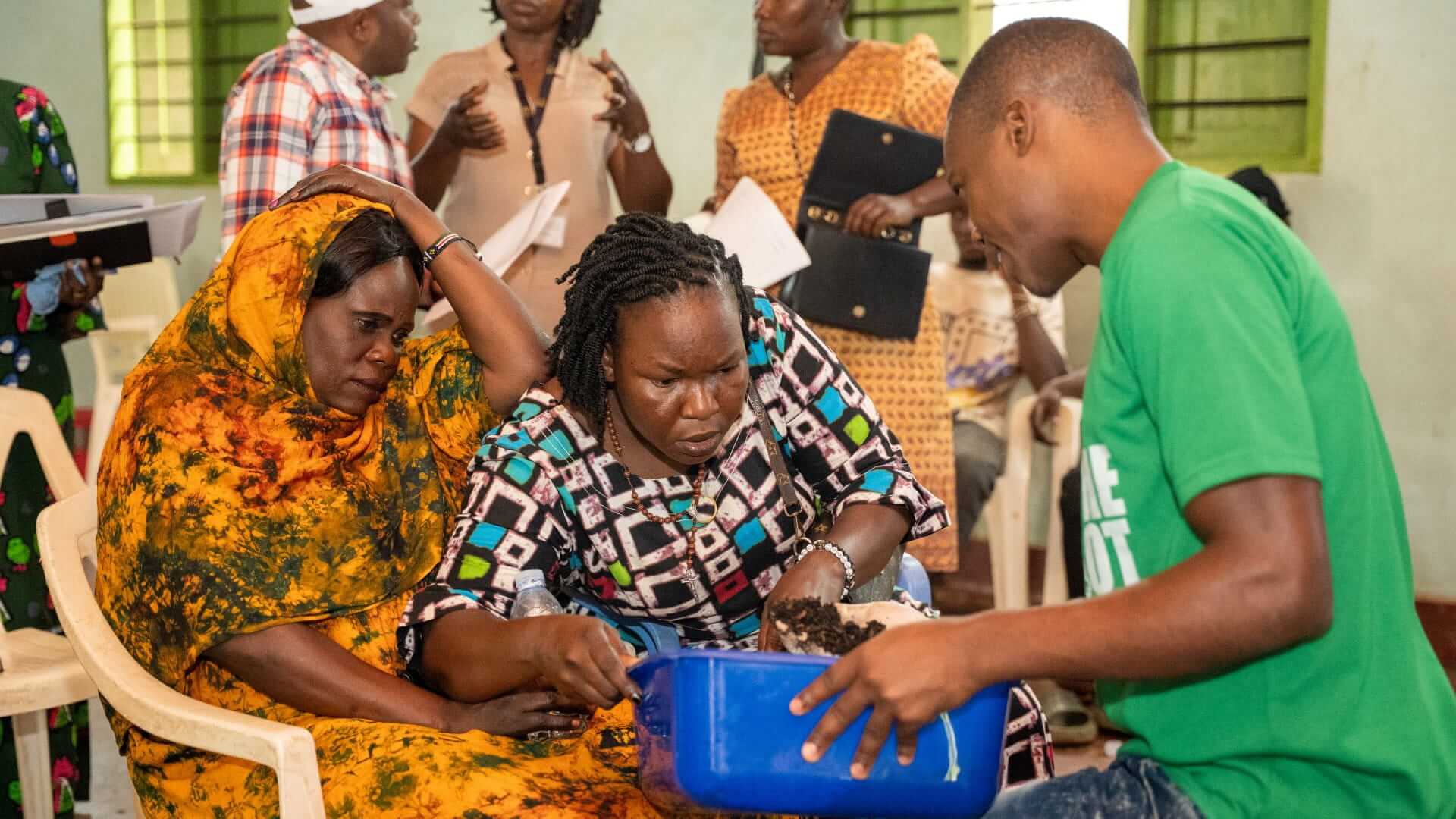
July 14, 2025, One of the lead trainers, guides clients through the Black Soldier Fly production life cycle. (PHOTO: Edgar Otieno for The IRC)
The International Rescue Committee (IRC) continues to foster meaningful partnerships that drive inclusive development and strengthen service delivery in urban refugee-hosting areas. A key strategic collaboration is with the Kampala Capital City Authority (KCCA), which remains instrumental in enhancing the livelihoods, protection, and economic inclusion of both refugees and host communities across Kampala.
In 2025, the Re:BUiLD program, led by the IRC, deepened its partnership with KCCA to launch a ClimateSmart Sustainable Livelihood Solutions initiative. This intervention targets urban refugees and host populations within the divisions of Kawempe and Nakawa, aiming to equip 500 clients(300 females & 200 males) with the tools and skills needed to succeed in environmentally sustainable and economically viable enterprises.
Climate-Smart Livelihood Pathways
The intervention focuses focuses on three innovative and climate-resilient livelihood options:
Briquette Production – converting agricultural waste into clean energy.
Mushroom Farming – a space-efficient, highnutrition source of food and income.
Black Soldier Fly (BSF) Farming – producing sustainable animal feed while reducing organic waste.
These pathways were carefully selected for their potential to enhance income generation, promote environmental stewardship, and strengthen community resilience in urban settings.
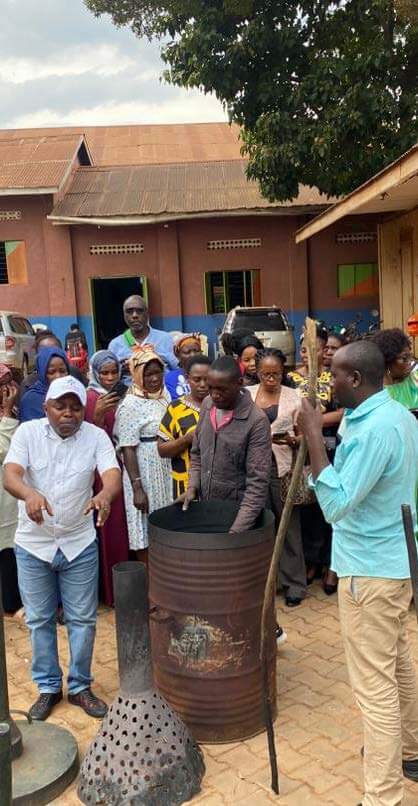
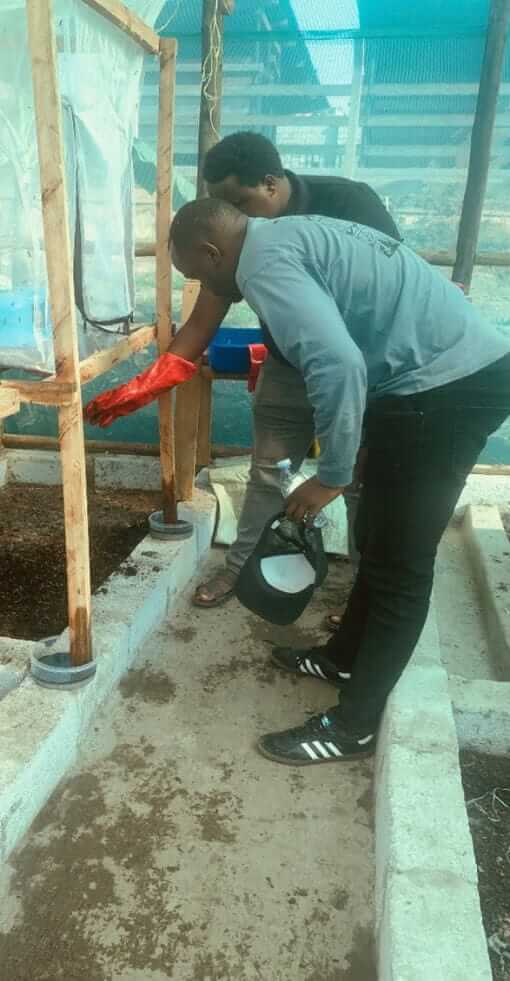
Left: July 15, 2025, Clients participate in a hands-on practical session on the briquette-making process, gaining skills in clean energy production. Right: Moses Okot, Advocacy Manager with the Re:BUiLD Program, inspecting a recently installed Black Soldier Fly production unit at KCCA Kyanja Agricultural Resource Centre. (PHOTO: David Hangi for The IRC)
Training and Empowerment
To date, 531 clients (including 286 refugees and 245 host community members) have been successfully registered and trained. The sessions were practical, participatory, and tailored to equip participants with essential knowledge and hands-on skills in each of the three livelihood tracks. Based on their interests and capacity, each client selected one pathway, briquette production, mushroom farming, or BSF farming to pursue as a primary source of income and self-reliance.
Equipping for Success
To support effective implementation and ensure longterm sustainability, the intervention has begun installing essential production infrastructure across key locations:
A fully equipped Black Soldier Fly (BSF) production unit has been established at the KCCA Kyanja Agricultural Resource Centre, with an additional unit scheduled for installation.
Four briquette-making machines have been delivered, with plans underway to procure six more.
Four mushroom-growing houses are currently in place, and ten additional units are set to be acquired.
These facilities serve as both training centers and production hubs, allowing clients to practice, refine, and scale their enterprises. The equipment will significantly enhance production capacity, improve product quality, and enable clients to transition from subsistence to market-oriented enterprises
Next Steps
As the intervention enters its next phase, clients will be grouped according to their selected enterprises and geographic location. Each group will receive tailored production equipment aligned with their chosen pathway. To ensure quality outcomes, experienced trainers will be assigned to support these groups with regular mentorship and practical, on-site coaching.
This continued guidance will help clients refine their techniques, strengthen group dynamics, and build viable business models ultimately fostering self-reliance, sustainability, and climate resilience.