Driving Refugee Inclusion And Community Resilience: Highlights From Re:BUiLD’s Work In Nairobi And Beyond
Driving Refugee Inclusion And Community Resilience: Highlights From Re:BUiLD’s Work In Nairobi And Beyond
Driving Refugee Inclusion And Community Resilience: Highlights From Re:BUiLD’s Work In Nairobi And Beyond
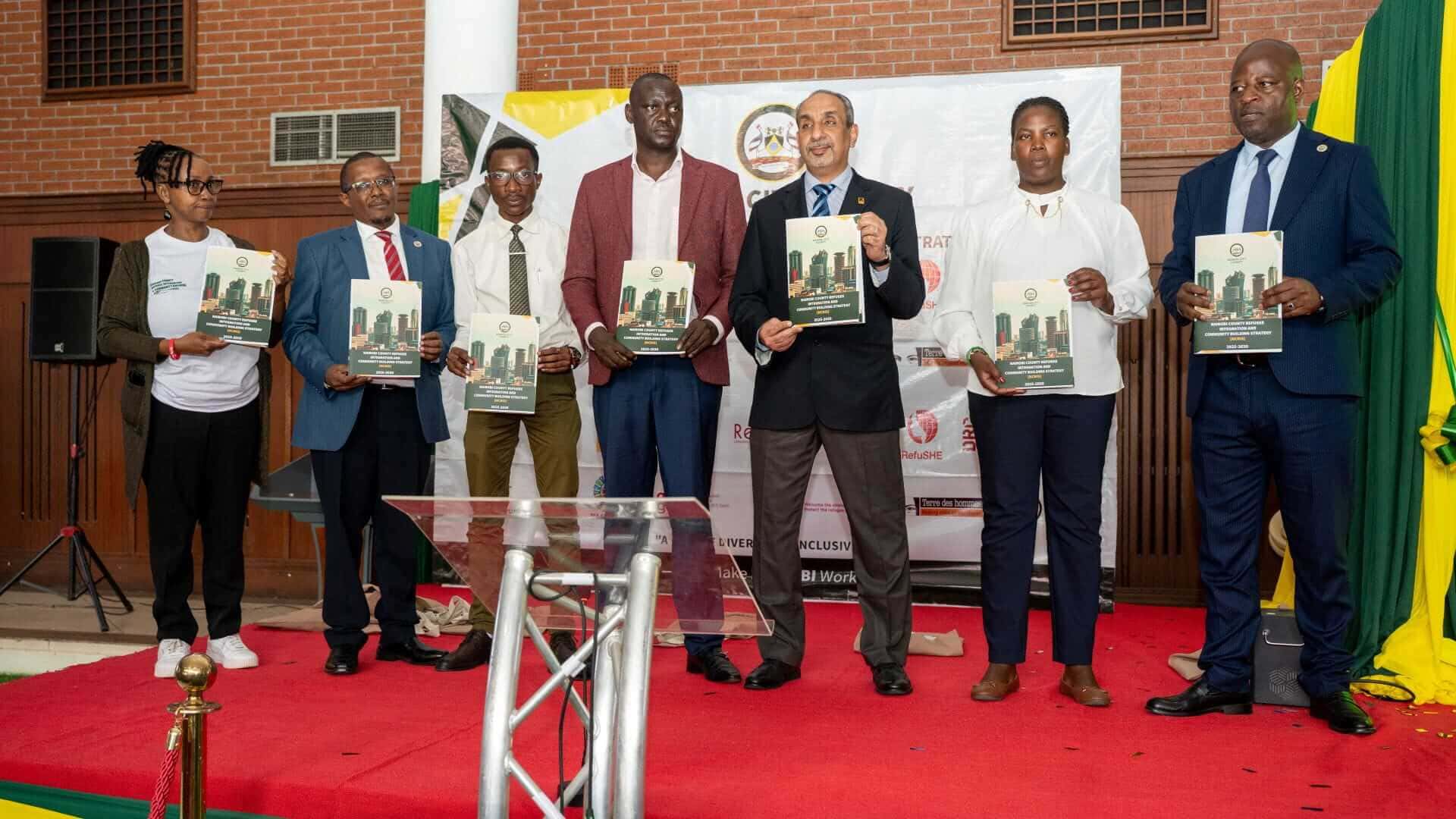
April 30, 2025, Mohammed El-Montassir, IRC Kenya Country Director, (2nd from right) joins Nairobi City County and partners to launch the Nairobi County Refugee Integration Strategy.(PHOTO: Edgar Otieno for The IRC)
The International Rescue Committee (IRC)’s Re:BUiLD program in partnership with Nairobi City County Government continue to advance refugee integration and inclusive urban development through strategic partnerships, policy advocacy, and community engagement in Kenya. Key milestones include the launch of Nairobi County’s Refugee Integration Strategy, localized capacity building, community peacebuilding dialogues, and the commemoration of World Refugee Day.
Launch of the Nairobi County Refugee Integration Strategy (NCRIS)
On April 30, 2025, Re:BUiLD participated in the launch of the Nairobi County Refugee Integration and Community Building Strategy (NCRIS), a groundbreaking initiative aligning county policies with national commitments under the Refugee Act and Shirika Plan.
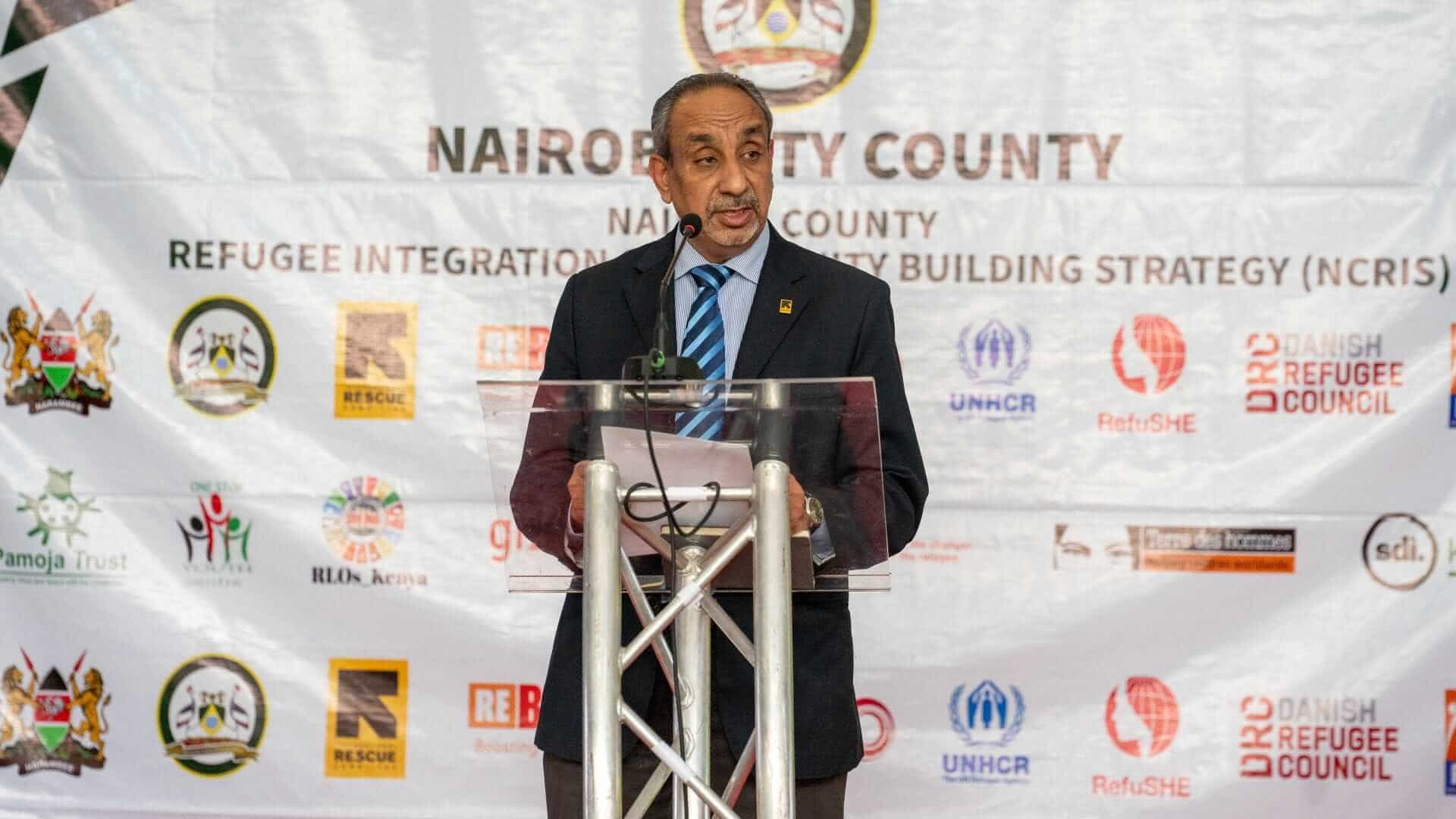
Mohammed El-Montassir, IRC Kenya Country Director speaks at the launch of the Nairobi County Refugee Integration Strategy (PHOTO: Edgar Otieno for The IRC)
Key focus areas of NCRIS include:
- Access to Services: Refugees will access public healthcare, education, and obtain business licenses.
- Legal Identity Recognition: Refugee documentation is formally recognized, easing access to services.
- Economic Empowerment: New pathways for employment and entrepreneurship are being unlocked.
- Social Cohesion: Community events and cultural exchanges aim to promote refugee-host community harmony.
- Multi-Stakeholder Collaboration: Joint efforts between Nairobi City County, IRC, and civil society actors are critical to implementation.
Training of Trainers: Building Local Capacity
To support the implementation of NCRIS and refugeefocused programming, Re:BUiLD conducted a Training of Trainers (ToT) session for members of the Joint Implementation Team (JIT) and Community Champions. The training covered refugee rights, the Shirika Plan, and Nairobi County Refugee Integration and Community Building Strategy (NCRIS) equipping 27 participants to cascade knowledge within their communities.
In parallel, 60 community leaders (42 hosts, 18 refugees) from across Kenya were trained in peacebuilding and conflict management. The sessions explored early warning mechanisms, systems thinking, and participatory program design empowering leaders to mediate tensions and foster community stability.
Balozi Mtaani Dialogues: Community-Driven Inclusion
The Balozi Mtaani initiative convened conversations across nine Nairobi sub-counties, engaging over 450 participants in discussions on refugee rights, youth empowerment, and social cohesion.
Held in neighborhoods such as Kibra, Mathare, Kamukunji, and Embakasi East, the forums created inclusive spaces for dialogue between refugees and host communities. Participants highlighted the importance of grassroots engagement and affirmed their commitment to peaceful coexistence.
World Refugee Day 2025: Celebrating Inclusion and Self-Reliance
Under the theme “Community as a Superpower – In Solidarity with Refugees,” Re:BUiLD partnered with Pamoja Trust, Nairobi City County Government (NCCG), and civil society organizations to host a series of events commemorating World Refugee Day 2025.
Key highlights:
Pre-event forums spotlighted practical steps to strengthen refugee inclusion in urban systems, including improved access to tax registration, business permits, and social health insurance.
- Unity Through Sport: Community football tournaments brought together youth from Somalia, South Sudan, DRC, Burundi, and host Kenyan communities, promoting peace through play.
- Main Conference (June 20, KCITI Hall): Over 300 participants engaged in discussions, cultural performances, and access to government services including KRA PIN registration and legal aid.
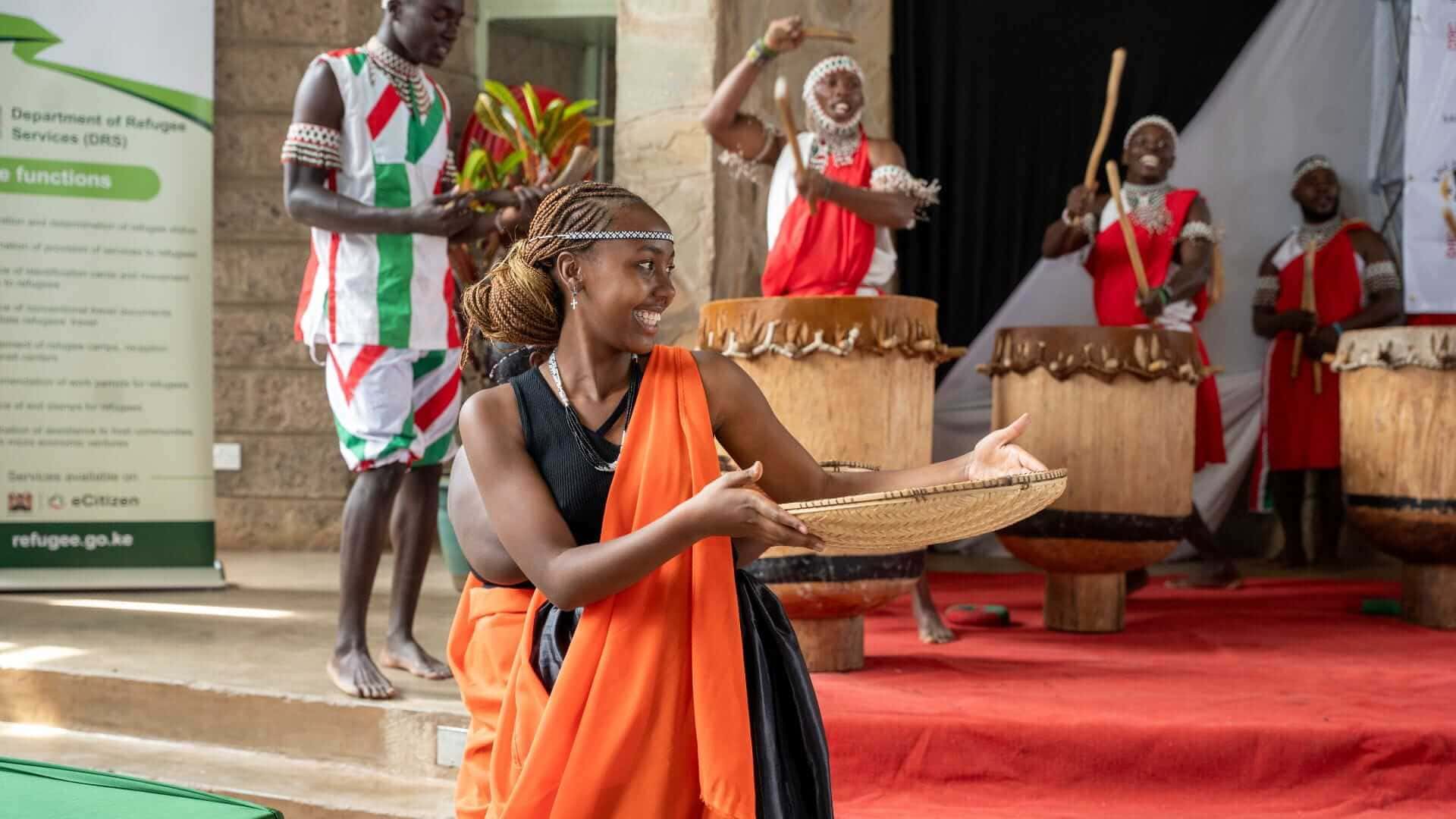
June 20, 2025, Burundian refugees entertain guests celebrating World Refugee Day in Nairobi. (PHOTO: Edgar Otieno for The IRC)
The event reinforced that refugees are not passive recipients of aid but active contributors to Kenya’s social and economic development.
County-Level Sensitization for Inclusive Governance
To support the operationalization of national policies at local level, Re:BUiLD convened a sensitization workshop for 50 county officers from the departments of security, compliance, and climate change. The workshop enhanced understanding of refugee protection laws and encouraged county stakeholders to mainstream refugee concerns into their planning and budgeting processes. The sensitization process is ongoing.
Looking Ahead: Sustaining Progress Through Partnership
The achievements of 2025 reflect a growing recognition across Kenya that inclusive development must leave no one behind—including urban refugees. Through close collaboration with the Nairobi City County Government, community leaders, and refugee-led organizations, Re:BUiLD continues to push forward a bold vision: a Kenya where refugees are protected, empowered, and fully integrated.