Celebrating Learnings And Partnerships: Highlights From The ReBUiLD Program Celebration Conference (PCC)
Celebrating Learnings And Partnerships: Highlights From The ReBUiLD Program Celebration Conference (PCC)
Celebrating Learnings And Partnerships: Highlights From The ReBUiLD Program Celebration Conference (PCC)
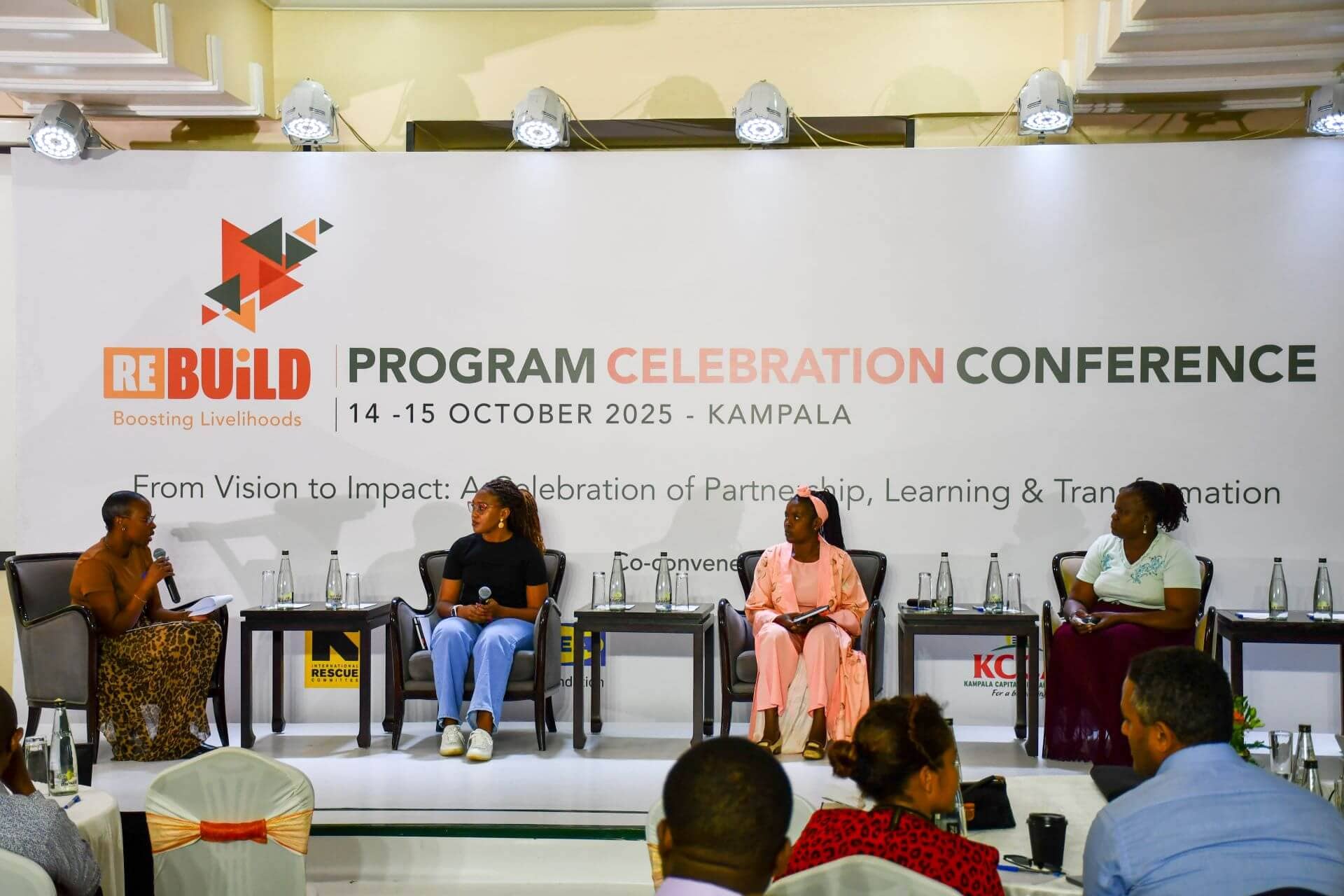
October 15, 2025, Kampala, Uganda. Re:BUiLD clients from both Kenya and Uganda share their personal experiences from the implementation of the program at the Program Celebrarion Conference (PCC) (PHOTO: David Hangi for The IRC)
Stakeholders, partners, and community members came together in Kampala for the PCC on October 14–15, 2025, a milestone event marking the successful completion of the current phase of the Re:BUiLD Program.
Convened by the International Rescue Committee (IRC), Kampala Capital City Authority (KCCA), and the IKEA Foundation, the PCC brought together a community of partners and changemakers. Among them were government and policy leaders, donors, refugee-led organizations, private sector actors, researchers, and Re:BUiLD clients, all united by a shared vision: to create inclusive, sustainable livelihoods for urban refugees and vulnerable host communities.
“Today is a wonderful day for the Re:BUiLD team, we get to have stakeholders in the refugee space, our colleagues from the IKEA Foundation and our implementing partners to showcase what we have been doing as the Re:BUiLD team over the past five years. We are super excited that the lessons, the results from our work have shown us what works, what it costs and sometimes what doesn’t work for refugees,” Re:BUiLD Program Director Priscilla Dembetembe, speaking at the start of the two-day conference.
Reflecting on an Inspiring Journey
Over two days, participants engaged in deep reflection, open dialogue, and shared learning on the lessons, achievements, and challenges that have shaped Re:BUiLD’s journey.
The conference offered space not just to celebrate, but to take stock of what truly makes a difference in refugee-inclusive urban economic livelihood development.
The Re:BUilD program started in 2021, operating in Kampala and Nairobi. Our target was to reach 20,000 (10,000 in Nairobi, 10,000 in Kampala) urban refugees and host community members—including women, men, and youth. The target has been exceeded, reaching 21,018 clients and achieving an impressive 105% of our goal.
Key Highlights from the Conference
Evidence-Based Reflections on Impact: Participants explored the latest evidence on Re:BUiLD’s outcomes, showcasing measurable progress in improving refugee and host community livelihoods.
For example, 2.7K 21,018 clients supported wills wage employment skills, 88% engaged in income generating activities 48% in wage employment & 52% in self-employment.
These findings demonstrated how data-driven approaches can inform policy and program design, ensuring that interventions are both scalable and sustainable.
Honest Conversations on What Works (and What Doesn’t): In a series of interactive learning sessions, stakeholders examined what has worked, what it costs, and what has not worked when supporting refugee livelihoods in urban contexts.
“Flexibility and experimentation weren’t just worth the risk, they were an essential part and a real focus for this program, the real risk would have been to stick to the original approach and miss the chance to learn what actually works,” Laura Costica, M&E Manager, the IKEA Foundation.
These honest discussions reinforced the value of adaptive learning—the willingness to test, learn, and pivot based on evidence and community feedback.
Exploring the Policy Landscape: Another major theme of the PCC was policy dialogue. Government representatives, policy experts, and development partners explored persistent barriers and opportunities for reform to strengthen economic inclusion for refugees in cities.
“We were able to come up with a framework which is the Nairobi County refugee integration and community building strategy where Re:BUiLD walked with us from the beginning up to the point that we were able to have it ratified by the Cabinet and that helped us be able to see that now we can legally give services to refugees within the county,” Susan Kimani, Assistant Director Youth Affairs, Nairobi City County Government
Let’s invest in carrying out rapid assessments to find out where there are integrational limiting factors within service delivery, policies and guidelines so that we bring them to the attention of the Central government to have them changed,” Daniel Kaseregenyi, Senior Assistant Town Clerk at KCCA added.
Celebrating Partnerships and People: The Gala Dinner was a moment of joy and recognition. Partners, clients, and teams came together to celebrate the resilience, innovation, and determination that have driven Re:BUiLD’s success.
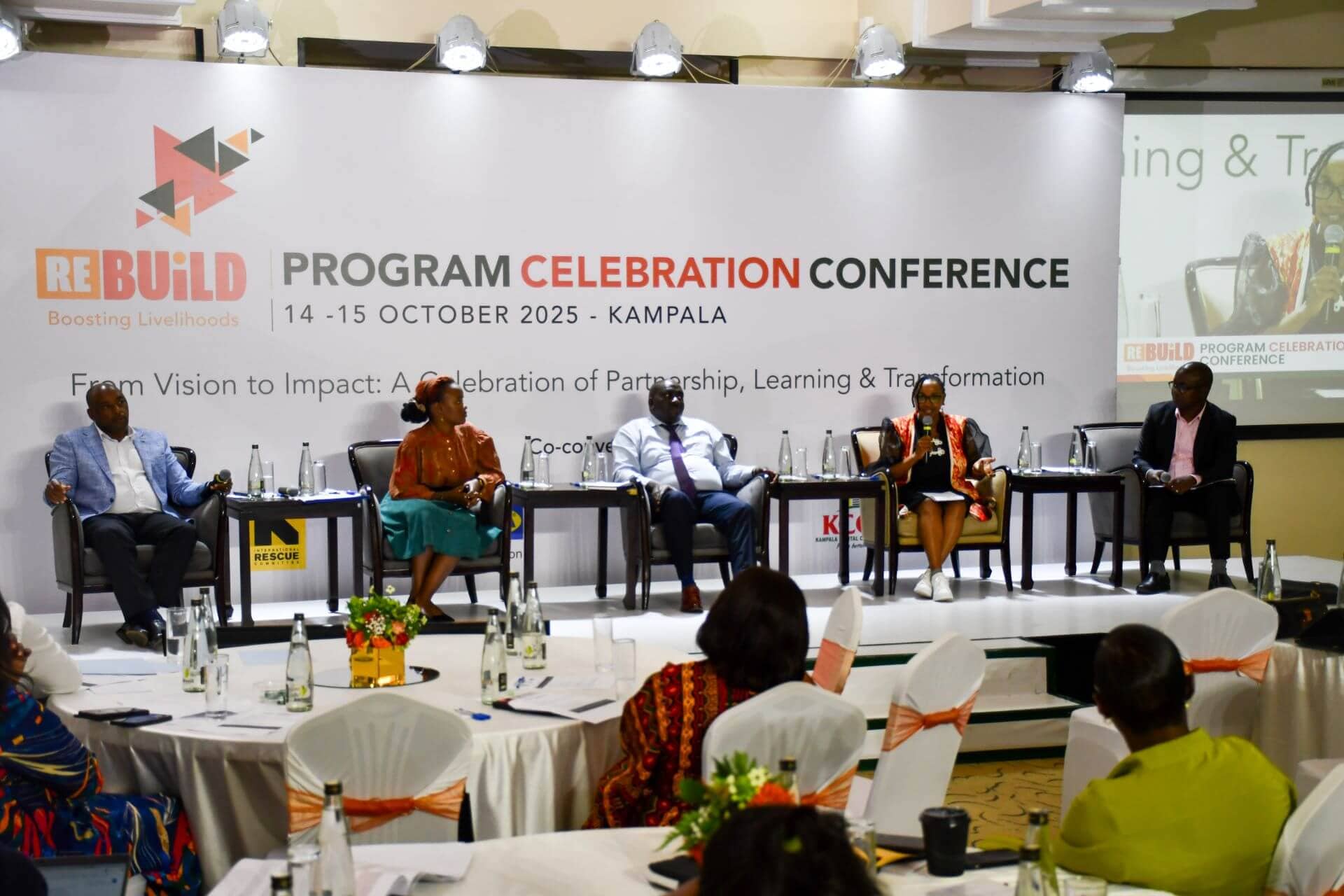
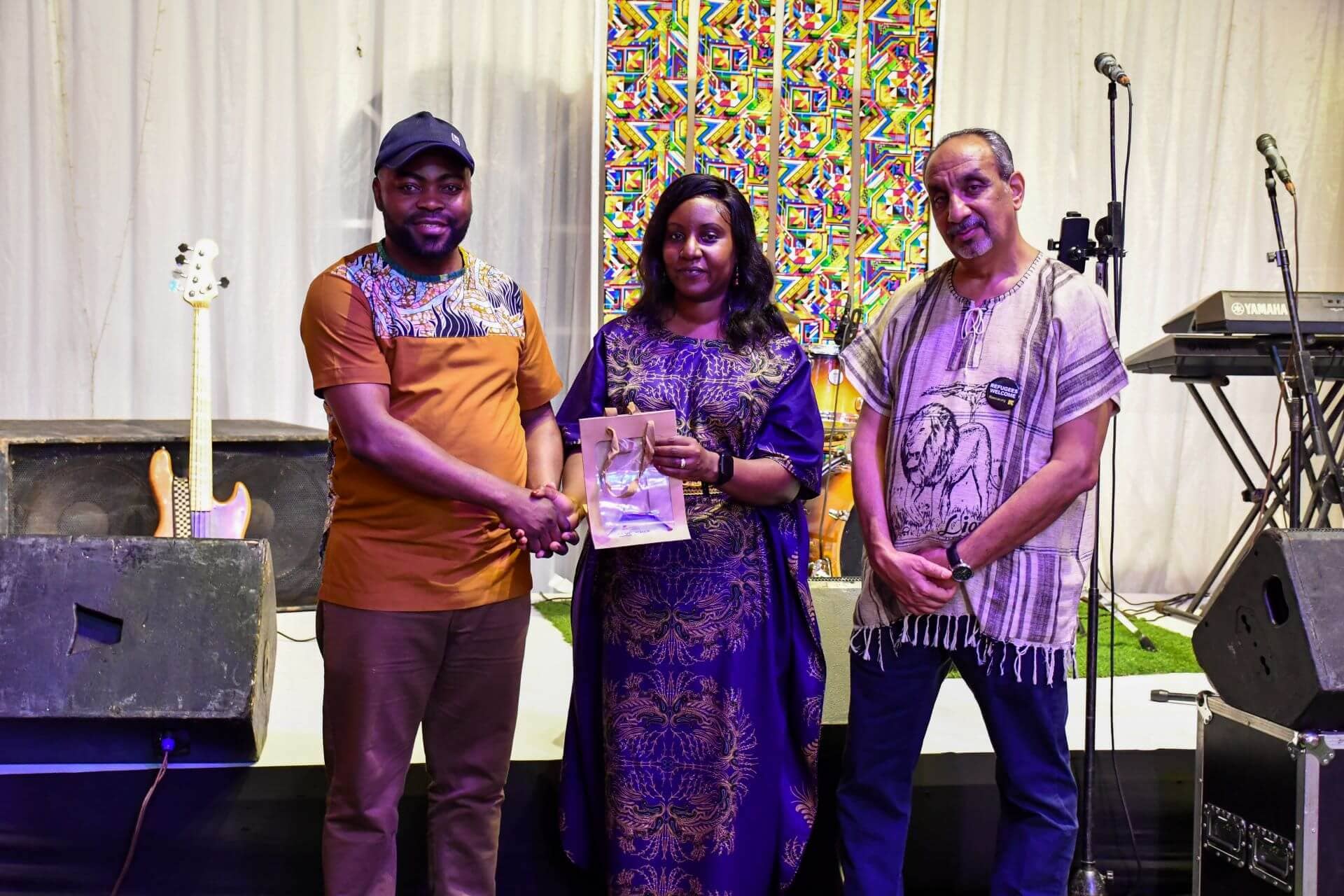
Left: October 14, 2025, Policy makers panel discussion at the Program Celebration Conference in Kampala. Right: IRC’s Joyce Mogane and Mohammed El Montassir present a gift to a Re:BUiLD partner at the Gala Dinner later in the evening. (PHOTO: David Hangi for The IRC)
Building on Momentum: As the Re:BUiLD program transitions into its next chapter, the spirit of collaboration and learning remains at its core. The collective insights from the PCC will guide the next phase of implementation, ensuring that future efforts are even more inclusive, evidence-driven, and locally owned.
What we have witnessed here, goes far beyond numbers or results, it is a testament to what becomes possible when partnerships are strong, when vision is shared, and when we put our clients, their aspirations and their voices and their potential at the very centre of our work. Scale and replicate ReBUiLD’s successes, expanding access to financial inclusion, climate resilience, livelihood and enterprise growth, turning today’s entrepreneurs into tomorrow’s entrepreneurs, strengthening collaborations with national and local governments to build sustainable systems that enable both refugees and host communities to thrive,” said Mohammed El Montassir, Country Director, IRC, Kenya at the conclusion of the PCC.