Breaking Barriers: Empowering Refugee Entrepreneurs Through Inclusive Financial Solutions
Breaking Barriers: Empowering Refugee Entrepreneurs Through Inclusive Financial Solutions
Breaking Barriers: Empowering Refugee Entrepreneurs Through Inclusive Financial Solutions
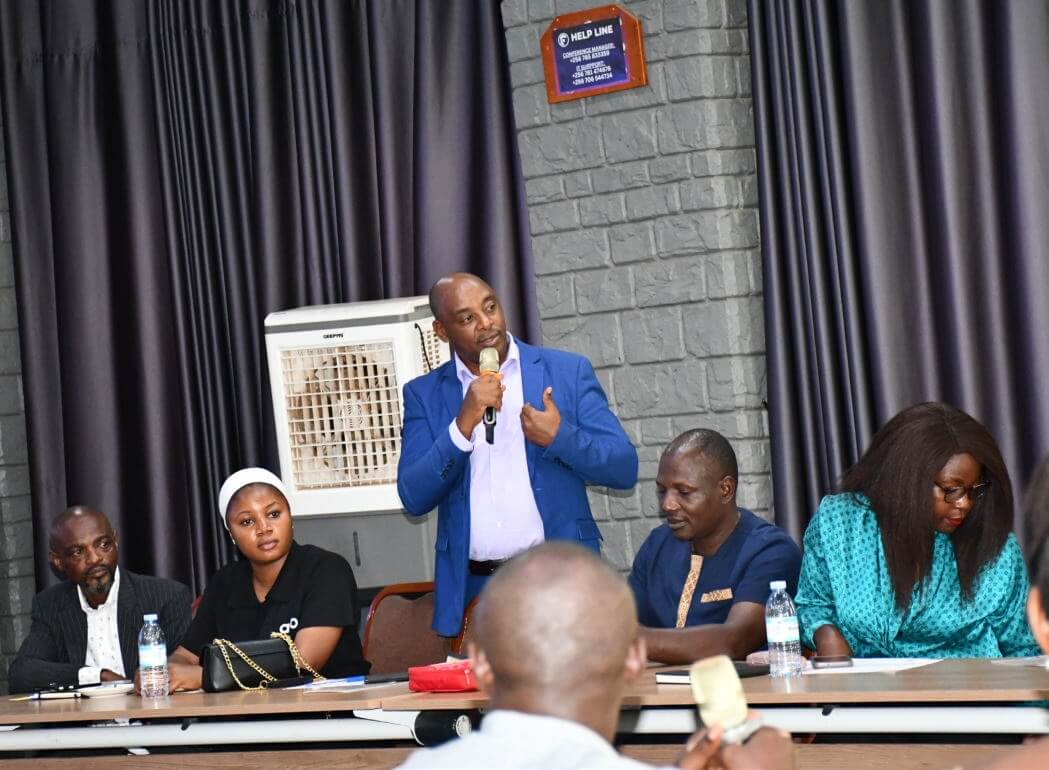
September 24, 2025, Kampala Capital City Authority’s Welfare and Community Services Manager Godwin Gumisiriza noted that the Authority has taken deliberate steps like establishing some markets in Kampala where refugees can sell and buy products freely without worrying about paying licence fees during a meeting convened by Re:BUiLD that brought together stakeholders in the business environment in Kampala.
In Kampala, refugees continue to demonstrate remarkable resilience and innovation in rebuilding their lives and livelihoods. Yet, for many refugee entrepreneurs, one persistent challenge remains—access to affordable and inclusive financial services.
At a meeting convened by Re:BUiLD on September 24, 2025, stakeholders came together to discuss these critical issues, focusing on how to strengthen refugee participation in the financial sector, address barriers to cooperative registration, and promote sustainable economic inclusion.
Innovative Pathways: Group Lending as a Lifeline
One of the most inspiring examples of financial innovation highlighted during the discussions was group-based lending. Financial institutions such as UGAFODE have successfully implemented this model, where refugees form savings and lending groups that guarantee each other’s loans.
UGAFODE Chief Executive Officer Shafi Nambobi, while revealing that the institution had to adjust internal policies to serve refugees, assured the clients that the model will continue: “UGAFODE will continue to do this because as a business, it is sustainable. Money is there for those who have business.”
This approach has delivered tangible impact in form of:
Increased access to credit: Refugees who lack collateral or formal banking history can still access small loans to grow businesses, support families, and invest in community projects.
Reduced default rates: Because loans are guaranteed collectively, members hold each other accountable, ensuring a culture of trust and responsibility.
Strengthened community networks: Beyond financial gain, savings groups foster solidarity, shared learning, and mutual support.
Group lending is proving that financial inclusion doesn’t always require brick-and-mortar banks—it can begin within communities themselves.

September 24, 2025, UGAFODE CEO Shafi Nambobi speaking during a meeting convened by Re:BUiLD that brought together stakeholders in the business environment in Kampala. He said his institution had to adjust internal policies to serve refugees.
The Challenge
Despite the success of group lending, many refugee-led Savings and Credit Cooperative Organizations (SACCOs) face daunting challenges when trying to formalize their operations.
Participants at the Re:BUiLD meeting identified several recurring barriers, including:
Bureaucratic delays and lengthy registration procedures
Lack of proper documentation, such as national identification or business licenses
Limited awareness among refugees about the SACCO registration process
These hurdles prevent many refugee-led financial groups from registering officially, restricting their growth, credibility, and access to external financing opportunities.
Recommendations
To create an enabling environment where refugees can thrive economically, participants proposed several actionable recommendations:
Streamline SACCO Registration Processes
Government agencies and financial regulators can collaborate to simplify procedures and make them more accessible to refugee communities.Introduce Mobile Registration Units
Bringing registration services directly to refugee-hosting areas would save time and resources while promoting awareness and participation.Simplify Documentation Requirements
Allowing alternative forms of identification and reducing bureaucratic barriers would enable more refugee-led groups to formalize their operations.Provide Technical Support and Capacity Building
Financial institutions, NGOs, and development partners can offer mentorship, training, and ongoing support to strengthen SACCO management and compliance.
Re:BUiLD’s Commitment to Refugee Economic Inclusion
The discussions reaffirmed Re:BUiLD’s commitment to creating a more inclusive and supportive environment for refugees doing business in Kampala and beyond. By addressing systemic barriers and amplifying successful community-based models like group lending, we can unlock the full potential of refugee entrepreneurship.
Financial inclusion is more than just access to money—it’s about empowerment, dignity, and opportunity. Together, through partnerships and innovation, we can ensure that every refugee has the chance to build, grow, and thrive.