Borderless Justice: Advancing Freedom of Movement for Forcibly Displaced Persons in the East and Horn of Africa
Borderless Justice: Advancing Freedom of Movement for Forcibly Displaced Persons in the East and Horn of Africa
Borderless Justice: Advancing Freedom of Movement for Forcibly Displaced Persons in the East and Horn of Africa
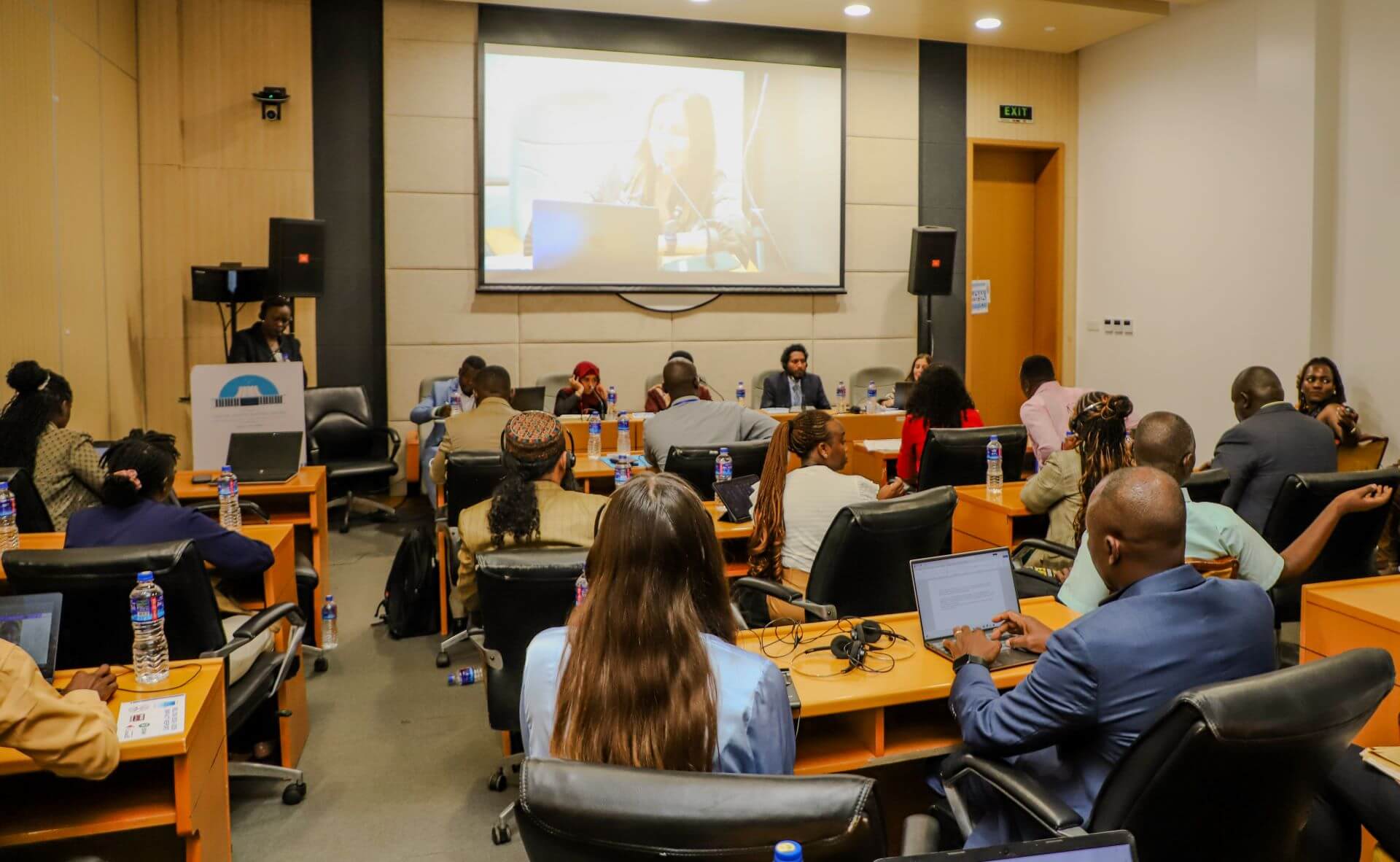
Partners, CSOs, government officials, and panelists at the side event “Borderless Justice: Advancing Freedom of Movement for Forcibly Displaced Persons in the East and Horn of Africa,” held during the 85th ACHPR Session in Banjul, The Gambia.
The 85th Ordinary Session of the African Commission on Human and Peoples’ Rights (ACHPR), held from 21–30 October 2025 at the Sir Dawda Kairaba Jawara International Conference Centre in Banjul, The Gambia, brought together human rights defenders, civil society actors, and state representatives to reflect on the state of human rights across the continent. As the principal human rights body of the African Union, the ACHPR plays a pivotal role in promoting and protecting the rights enshrined in the African Charter on Human and Peoples’ Rights.
On Friday, 24th October 2025, a timely and impactful side event titled “Borderless Justice: Advancing Freedom of Movement for Forcibly Displaced Persons in the East and Horn of Africa” was convened. Co-organised by the East African Community (EAC) countries of Uganda, Kenya, Ethiopia, and South Sudan, alongside partners including the International Rescue Committee (IRC), Lutheran World Federation (LWF), ReDSS, International Detention Coalition (IDC), Woord en Daad, and others, the event brought together diverse voices to address the urgent need for regional solutions to displacement and mobility challenges.
The Urgency of Borderless Justice
Forcibly displaced persons in the East and Horn of Africa continue to face legal, administrative, and socio-economic barriers that severely restrict their freedom of movement. Despite the existence of regional frameworks such as the 2018 AU Protocol on Free Movement and the Kampala Convention, implementation remains weak. Refugees often struggle to access Convention Travel Documents (CTDs), face visa restrictions, and are subjected to arbitrary encampment policies that limit their access to livelihoods, education, and participation in local economies.
As Professor Siobhán Mullally, UN Special Rapporteur and Chair of PIERR, noted in her video intervention, “freedom of movement is not a luxury , it is a right that underpins access to development, education, and dignity.” She called for the full implementation of Article 24 of the African Charter, urging states to translate commitments into action.
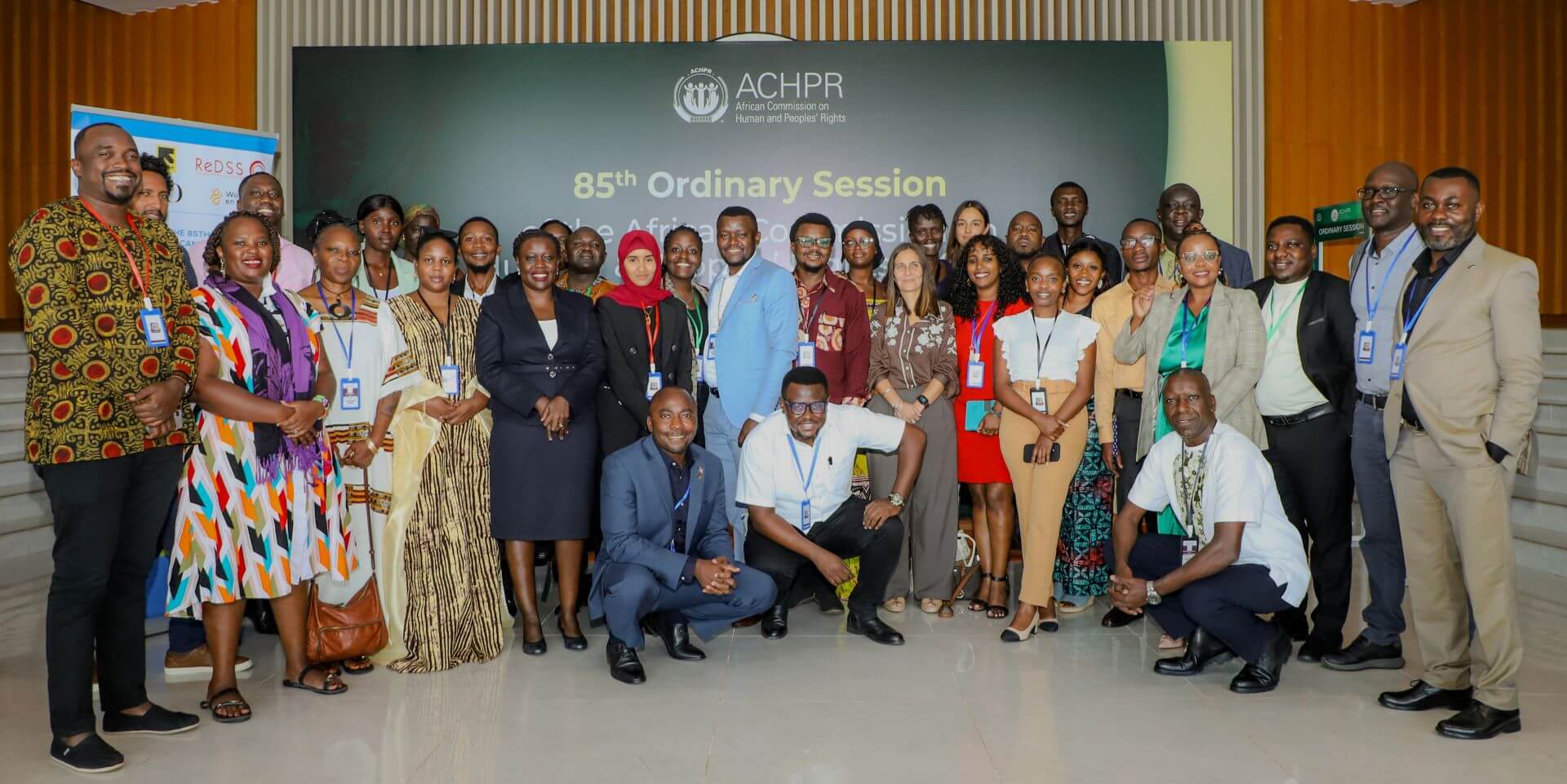
Participants of the side event pose for a group photo with Hon. Commissioner Selma Sassi-Safer of the ACHPR during the 85th ACHPR Session in Banjul, The Gambia.
Voices from the Region
The panel featured powerful contributions from refugee-led organisations and regional experts:
Faduma Abukar (TIB, Ethiopia)
Robert Hakiza (YARID, Uganda)
Ndayisenga Jonas (Umoja Refugee Creative, Kenya)
Dr. Alemu Asfaw Nigusie (ReDSS, Ethiopia)
Daniel Mahajub Ismail (UNHCR DAFI Scholar, South Sudan)
Hon. Commissioner Selma Sassi-Safer (ACHPR)
Each speaker highlighted persistent challenges in their national contexts , from delays in issuing travel documents to the use of internal movement passes that restrict mobility. They called for reforms such as the introduction of unique ID numbers at registration, machine-readable documents, and the elimination of bureaucratic barriers that disproportionately affect displaced populations.
In a moving testimony, Daniel Mahajub Ismail shared:
“For many refugees and internally displaced people, freedom of movement remains severely restricted due to insecurity, fear of harassment, and lack of official identification documents. Ensuring safe and unrestricted movement is essential for refugees and displaced populations to rebuild their lives and contribute meaningfully to South Sudan’s future.”
Outcomes and Commitments
The side event concluded with a strong consensus on the need for multisectoral, rights-based approaches to address mobility challenges. Key outcomes included:
Recognition that freedom of movement is foundational to accessing rights and opportunities.
Commitments from the ACHPR, through Commissioner Sassi-Safer, to continue monitoring and advocating for state compliance with regional instruments.
Pledges from civil society and refugee-led organisations to document violations and engage in sustained advocacy.
Reaffirmation by EAC partners to address policy-practice gaps and harmonise legal frameworks.
Looking Ahead
The event’s closing messages were clear: freedom of movement is a human right, not a privilege. Governments must allocate resources to process identification documents, implement refugee legislation, and remove bureaucratic hurdles such as visa fees and work permit restrictions. There is also a pressing need to include refugees in national development plans and ensure that gender-specific vulnerabilities are addressed.
As the region continues to grapple with conflict, climate change, and displacement, the call for borderless justice is more urgent than ever. Through continued collaboration between governments, civil society, and international actors, we can ensure that no refugee is arbitrarily denied their right to move, thrive, and belong.
Participants of the side event pose for a group photo with Hon. Commissioner Selma Sassi-Safer of the ACHPR during the 85th ACHPR Session in Banjul, The Gambia.