A fresh start for Kenya officials serving refugees: Strengthening government capacity through the refugee management programme
A fresh start for Kenya officials serving refugees: Strengthening government capacity through the refugee management programme
A fresh start for Kenya officials serving refugees: Strengthening government capacity through the refugee management programme
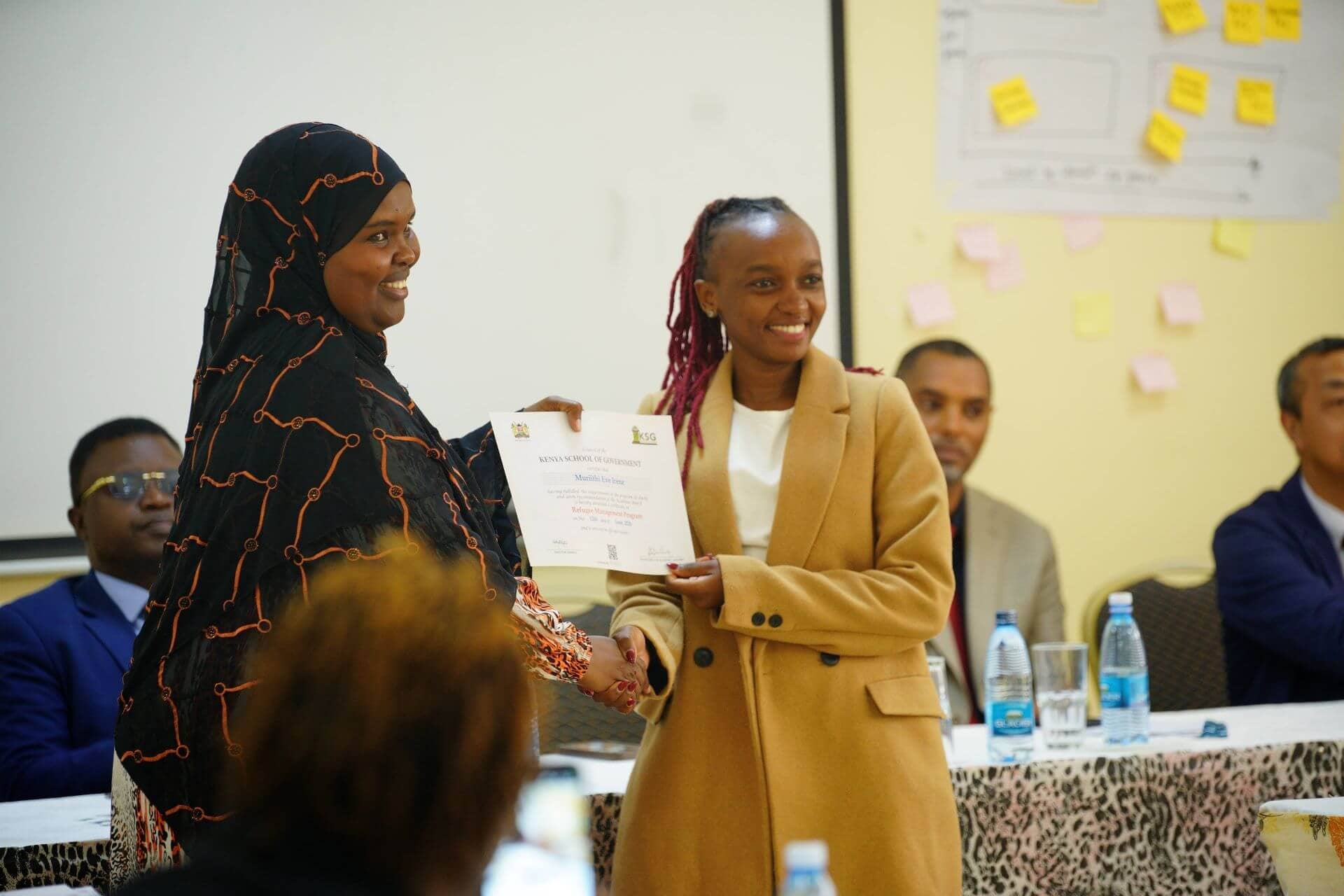
12 June, 2026, Nairobi. KSG Refugee Programme participant awarded certificate by Ismahan Mohamoud, IRC Officer, after training. Photo: Nancy Mwangi for the IRC.
Kenya's refugee response is undergoing an important transformation. As the country implements the Refugee Act (2021) and the Shirika Plan, refugee inclusion is increasingly becoming a shared responsibility across national and county governments. Achieving this vision requires more than progressive policies—it requires public institutions equipped with the knowledge, skills, and partnerships needed to deliver inclusive services.
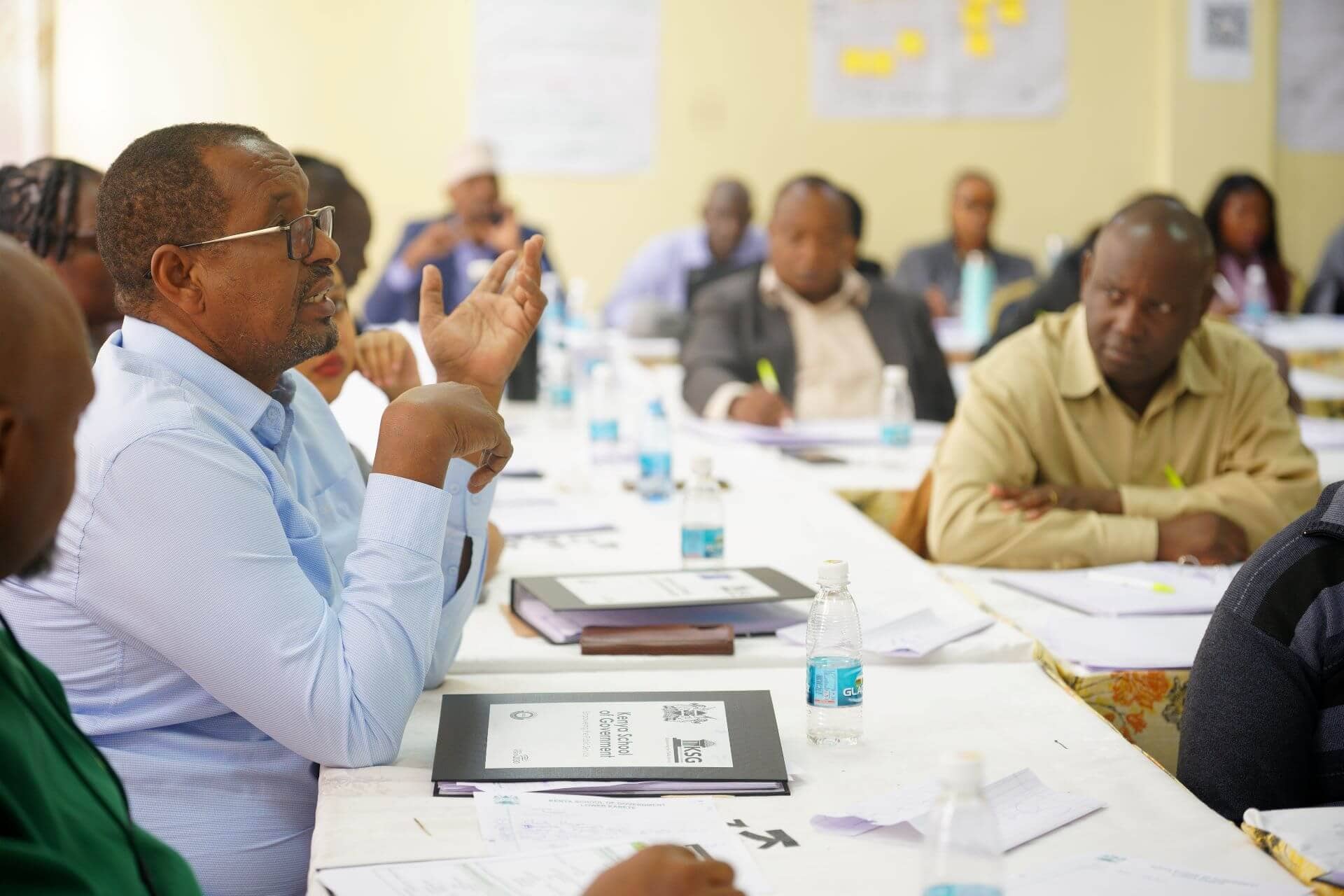
Recognising this need, the Kenya School of Government (KSG), the Department of Refugee Services (DRS), JICA, VNG International with support from the International Rescue Committee (IRC), through the Re:BUiLD program, convened the second cohort of the Refugee Management Programme.
The two-weeks training brought together government officials from refugee-hosting counties and national institutions to strengthen their understanding of refugee governance, protection, inclusion, conflict management, mental health, and public service delivery.
Responding to Kenya's Changing Refugee Landscape
Throughout the programme, participants explored refugee law and policy, migration management, conflict prevention, social cohesion, mental health, and practical approaches to improving coordination between national and county governments.
The programme also encouraged participants to exchange experiences and identify practical solutions that can strengthen implementation of Kenya's refugee inclusion agenda.
For many participants, the training fundamentally changed how they viewed refugee management.
Daniel Karingiti, Deputy Camp Manager at the Wajir Refugee Complex, explained that the programme broadened his understanding beyond humanitarian assistance to include the wider social and economic realities affecting displaced populations.
He added that effective refugee management begins with empathy.
"We should first look at refugees and empathize with them because they are people like us. They have simply experienced difficult circumstances." — Daniel Karingiti, Deputy Camp Manager, Wajir Refugee Complex
His reflections capture one of the program’s central messages, that refugee inclusion begins with recognising refugees as people with aspirations, capabilities, and the potential to contribute to society.
Learning That Inspires Action
The programme also provided many participants with their first structured introduction to refugee inclusion.
For Ifrah Ali Ibrahim, a Trade Officer from Garissa County Government, the experience transformed her understanding of refugee rights and integration.
"Before attending this training, I actually knew nothing about refugee rights or inclusion. Today I understand that we need to integrate with refugees rather than isolate them." — Ifrah Ali Ibrahim, Trade Officer, Garissa County Government
Looking ahead, she believes awareness within host communities is equally important.
"We should educate people who live with refugees. Refugees have rights, and host communities should understand that they should not exclude them." — Ifrah Ali Ibrahim, Trade Officer, Garissa County Government
Her comments demonstrate how capacity-building can extend beyond government institutions to influence wider community attitudes toward refugee inclusion.
Counties Leading the Way
County governments play a critical role in implementing inclusive refugee policies through local planning and service delivery.
Mary, Senior Trade Officer from Turkana County Government, noted that the programme reinforced the importance of ensuring refugees have equitable access to opportunities and public services.
"Any facility we have, we need to share with refugees. We need to take them as brothers. Kenya is like home. Turkana is like home. Any resources we have... we need to include refugees together." — Mary, Senior Trade Officer, Turkana County Government
These reflections illustrate the growing recognition that inclusive development benefits both refugees and host communities.
Strengthening Partnerships for Better Governance
The Refugee Management Programme brought together government institutions and development partners committed to strengthening Kenya's refugee response.
Sarah Hepworth, Programme Coordinator, encouraged participants to translate the knowledge gained during the training into practical improvements within their institutions.
"The true success of this programme will be reflected in improved coordination, better service delivery, and strengthened refugee management practices." — Sarah Hepworth, Programme Coordinator, Refugee Management Programme
Development partners also reaffirmed their commitment to supporting Kenya's evolving refugee inclusion agenda.
Dr. Atsushi Hanatani, JICA Advisor to the Department of Refugee Services, emphasised the importance of strengthening development approaches alongside humanitarian responses.
"Humanitarian approaches alone are no longer sustainable. Refugee inclusion in service delivery is something we need moving forward." — Dr. Atsushi Hanatani, JICA Advisor, Department of Refugee Services
Speaking on behalf of IRC’s Re:BUiLD program, Ismahan Mohammed encouraged participants to apply and share the knowledge gained through the programme to strengthen refugee services within their respective institutions.
"The value of learning does not lie in what we know. It lies in what we do with what we know." — Emmanuel Kisiangani, Acting Director, Kenya School of Government
By strengthening the capacity of those responsible for shaping policy and delivering services, Re:BUiLD is helping build the institutional foundations needed to ensure refugees and host communities can thrive together in more inclusive, resilient, and sustainable communities.