Cities Driving Refugee Inclusion: Reflections from GRF Review Meeting 2025
Cities Driving Refugee Inclusion: Reflections from GRF Review Meeting 2025
Cities Driving Refugee Inclusion: Reflections from GRF Review Meeting 2025
By Irene Shiundu, Susan Kimani (NCCG) and Godwin Gumisiriza (KCCA)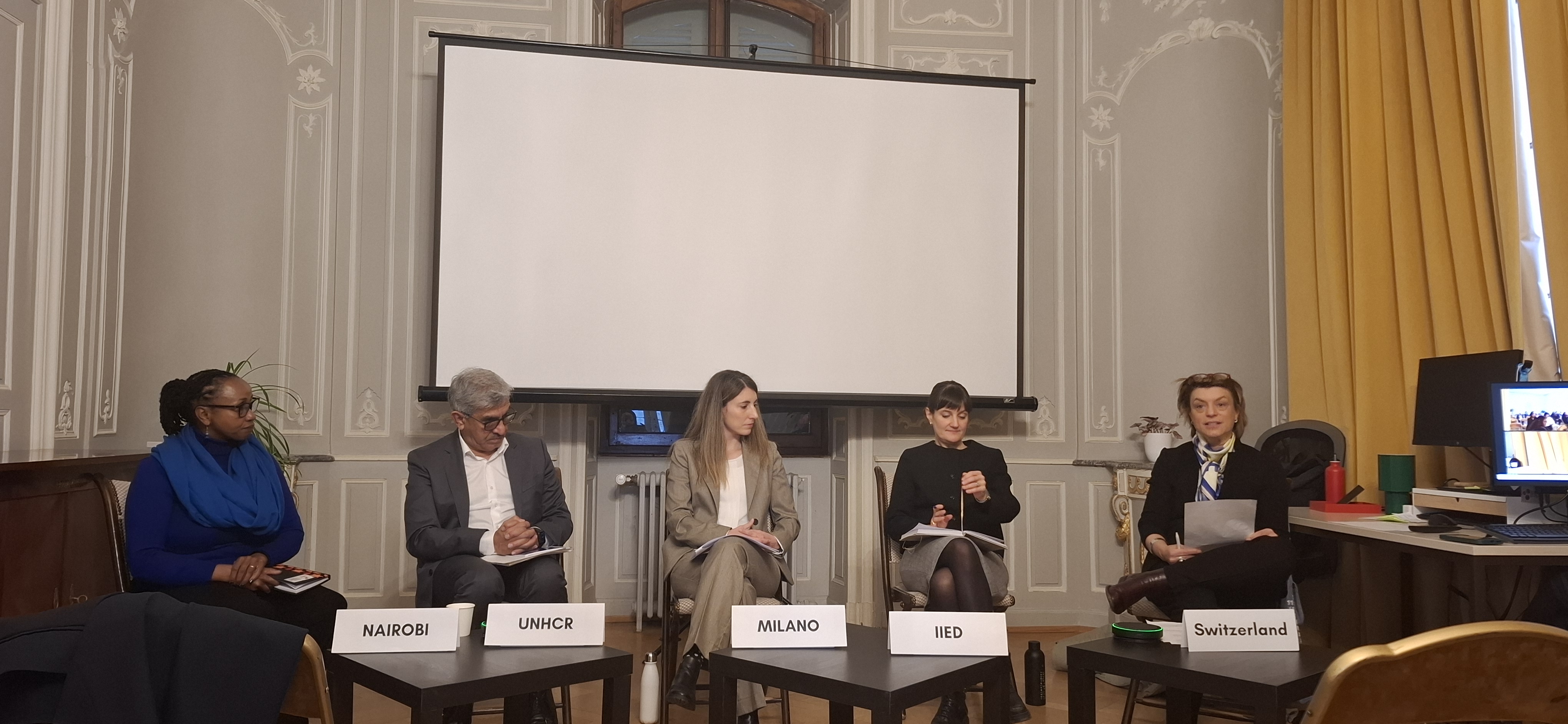
Nairobi City County unpacking the NCRIS and milestones during a panel session on City leadership for refugee socio-economic inclusion at the Global Cities Hub, Geneva.
In December 2025, the Re:BUiLD Team had the opportunity of attending the Global Refugee Forum (GRF) Progress Review in Geneva alongside representatives from Nairobi City County Government (NCCG) and Kampala Capital City Authority (KCCA). This gathering came at a time when the world was facing the most severe displacement crisis in modern history. Humanitarian resources and funding are increasingly constrained, xenophobic policies and governments are on a sharp rise, and conflict and forced displacement continue to escalate at an alarming pace.
Yet, amid these challenges, Refugee-led organizations, NGOs, and civil society partners are stepping forward with resilience, leadership, and innovation. It was not just about stocktaking; it was about reviewing the progress of pledges made in 2023 and the real impact on the ground. real impact on the ground.
Key Achievements Registered included:
Participation & Integration: At the Review meeting, Refugee-led organizations shaped policy dialogues, ensuring that voices from affected communities were central to decision-making.
Policy Roundtables: Six major roundtables advanced the humanitarian-development-peace (HDP) Nexus, sharing scalable models. Two critical roundtables stood out: one on Multiplying Impactful Investments, which explored how innovative and blended financing can amplify HDP outcomes for displaced and host communities; and another on Scaling Up Climate Finance which focused on integrating displacement into climate adaptation strategies while tackling barriers such as risk perceptions, fragmented funding, and data gaps.
Financing Innovations: Outcome-based funding, blended finance, and climate-linked investments gained traction, opening new pathways for sustainable refugee support.
Inclusive planning: Refugee inclusion in planning and budgeting for service delivery had taken root as critical in supporting their resilience and livelihoods including income generation and job creation.
Nairobi & Kampala: Joint City Pledges
The Joint City Pledge by KCCA and NCCG was a highlight of the forum, demonstrating how cities are embedding refugee inclusion into urban systems. The cities work, supported by the International Rescue Committee through the Re:BUiLD program, was spotlighted as a model of how local leadership can drive global progress into tangible outcomes. Specifically, the joint action committed to: Institutionalizing refugee access to city services and infrastructure by 2027, including establishing dedicated refugee desks or units within each city administration; Enhancing refugee participation, including mechanisms for involvement in city planning, public participation structures, and neighborhood decision-making; and establishing at least one innovation Centre per city by 2027 to foster entrepreneurship, technical skills, and digital livelihoods among refugees and host communities et al.
Through Re:BUiLD, both cities have:
Strengthened coordination with local authorities to integrate refugee needs into municipal systems.
Enabled refugee participation in policy consultations and livelihood forums.
Expanded access to jobs, services, and representation within local governance structures.
These efforts were recognized as pioneering examples of how cities can transform global compact into local impact. As Mayor, Wilson Sanya of Koboko municipality in Uganda captured it perfectly: “Local solutions drive global progress.”
Refugees in the Heart of City Systems
In Kampala, Re:BUiLD program has gone beyond rhetoric to action. By strengthening collaboration with KCCA, refugee needs are now integrated into urban planning and service delivery. Refugees themselves have actively participated in livelihood forums and policy consultations, leading to groundbreaking decisions:
Refugee traders now access public city markets.
Representation has been secured within local council structures at the cell level.
Skills development is promoted through the KCCA Employment Bureau and Kabalagala one stop youth centre.
As Godwin Gumisiriza, KCCA aptly put it in his discussion moment, “Re:BUiLD has not only expanded refugees’ access to jobs and services but also embedded refugee inclusion into city strategic plan and budget.”
Nairobi’s story is equally inspiring. Through this action, the city has established refugee focal points, rolled out the Nairobi County Refugee Integration Strategy, trained over 1,500 officials, created inclusive market systems, and delivered climate-smart and digital livelihood programs reaching more than 600 people. Re:BUiLD has advanced digital literacy and employability by equipping the Nairobi County One Stop Center with IT equipment; computers, desks, and tents.
Over 80 refugees and host community youth have already benefited, gaining skills to participate in the digital economy.
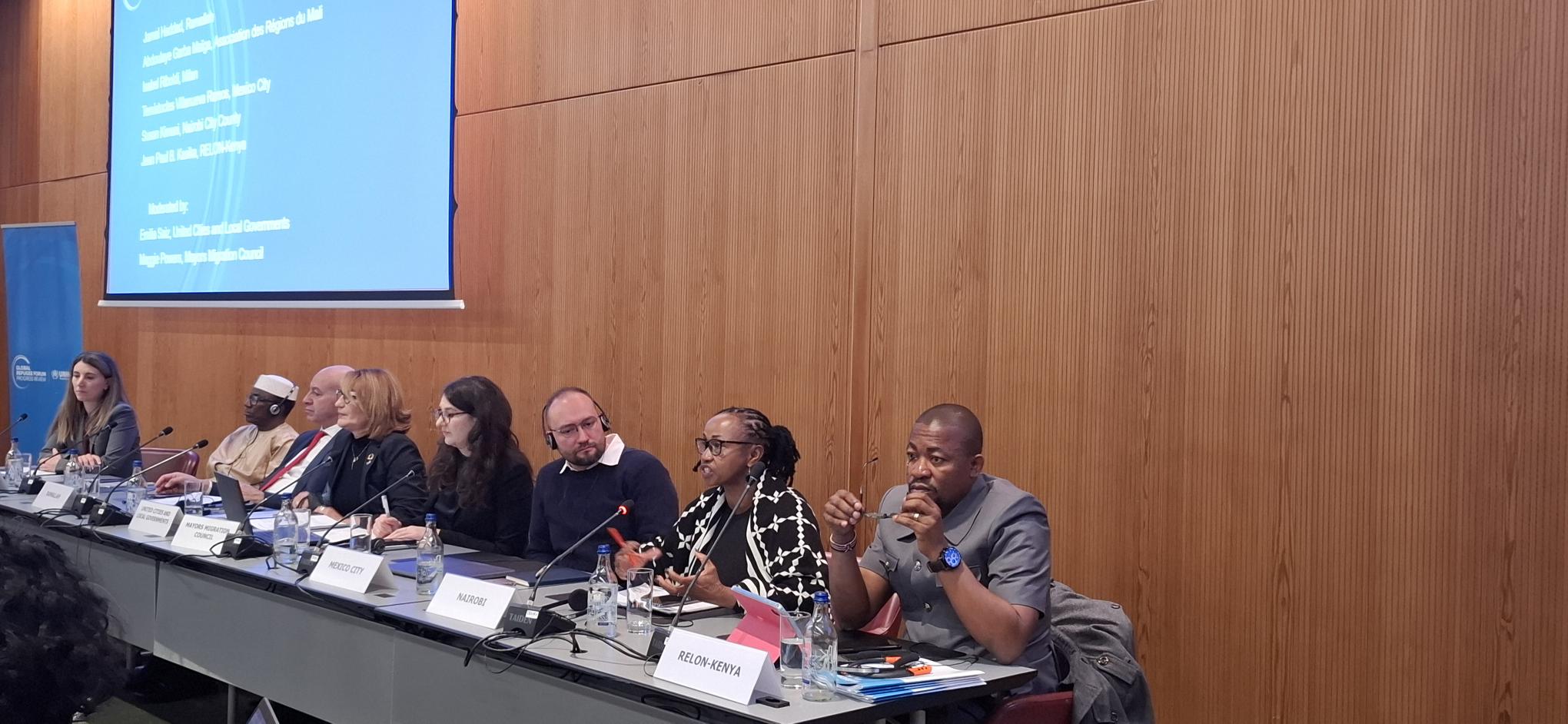
City officials sharing local impact during From Pledges to Progress side event
One youth participant shared, “For the first time, I feel I can compete in the digital economy, not as a refugee, but as a professional.”
During the Local Coalition for Migrants and Refugees, co-steered by United Cities and Local Governments, cities called out to partners to strengthen implementation in the following ways:
Provide predictable, multi-year funding; Grants tied to the Nairobi County Refugee Integration Strategy (NCRIS) to plan and institutionalize refugee-facing units and services.
Support monitoring & evaluation systems to track progress of integration, inclusion, and social cohesion.
Strengthening coordination among NCCG, NGOs / INGOs, refugee-led organizations (RLOs), UN agencies
Challenges such as limited funding, coordination gaps, and policy constraints were addressed through expanded partnerships, improved inter-agency platforms, and stronger political buy-in.
IRC supported pledges and programming were also well highlighted:
Education: The ERICC Research Consortium developed a framework for education in conflict and crisis, setting the stage for evidence-based policy and practice.
Kenya Teacher Training: The Teach Well Project enabled refugee teachers to enroll in public Teacher Training Colleges for the first time, standardizing professional development and reducing fragmentation.
Legal Capacity & Inclusion: New pledges committed to training 80 community paralegals and expanding refugee participation in legal assistance projects.
These initiatives reinforced IRC’s role in advancing durable solutions and embedding refugee inclusion across multiple sectors.
General Reflections from GRF Review Meeting 2025
Efficiency Reforms: UN system reforms improved coordination across humanitarian, development, and peace sectors.
Shrinking Fiscal Space: Donor priorities shifted inward, reducing available ODA.
Localisation: Recognized as a delivery standard, not charity. Local actors are central to sustainability and accountability.
Partnerships: Need redesign to ensure shared power, learning, and responsibility.
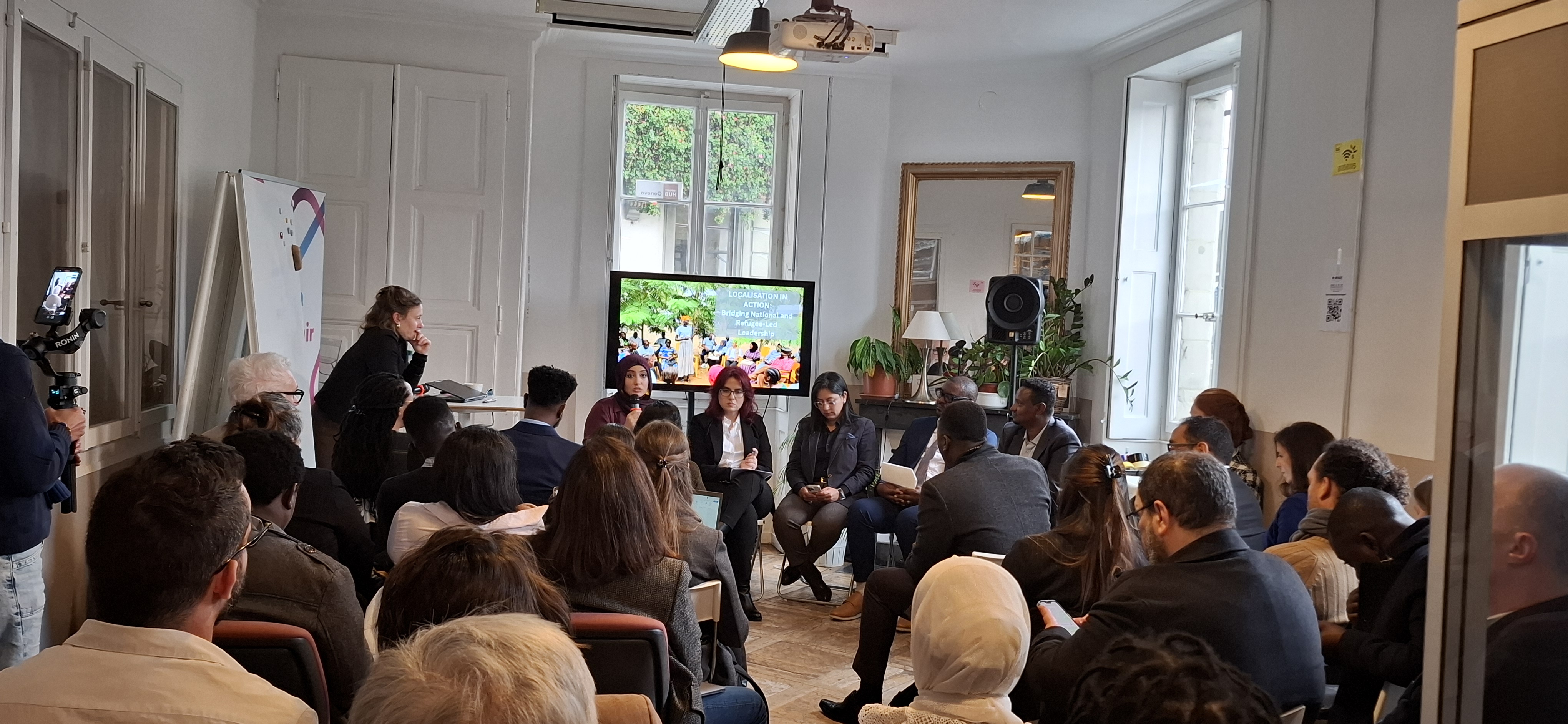
Plenary session at the Impact Lab on Localization in action and bridging leadership.
The GRF spotlight on Nairobi and Kampala reaffirmed a powerful truth: local solutions drive global progress. By embedding refugee needs into city systems, fostering partnerships with private sector actors, and investing in youth empowerment, these cities are setting a precedent for others worldwide.
As we reflect on the Forum, we are struck by the energy and vision of city leaders, refugee communities, and partners like the IRC. Their work is not only transforming urban refugee inclusion but also inspiring a broader movement toward equitable, resilient, and inclusive cities. “When development partners work closely with implementors, the impact is quite remarkable. This is evidence in the way Rebuild work directly with Nairobi and Kampala.” said Susan Kimani, Deputy Director Youth, Sports, Talent, Nairobi County.