Livelihoods Cost-Effectiveness Brief 2023 Re:BUiLD Uganda Wave 1 RCT
Livelihoods Cost-Effectiveness Brief 2023 Re:BUiLD Uganda Wave 1 RCT
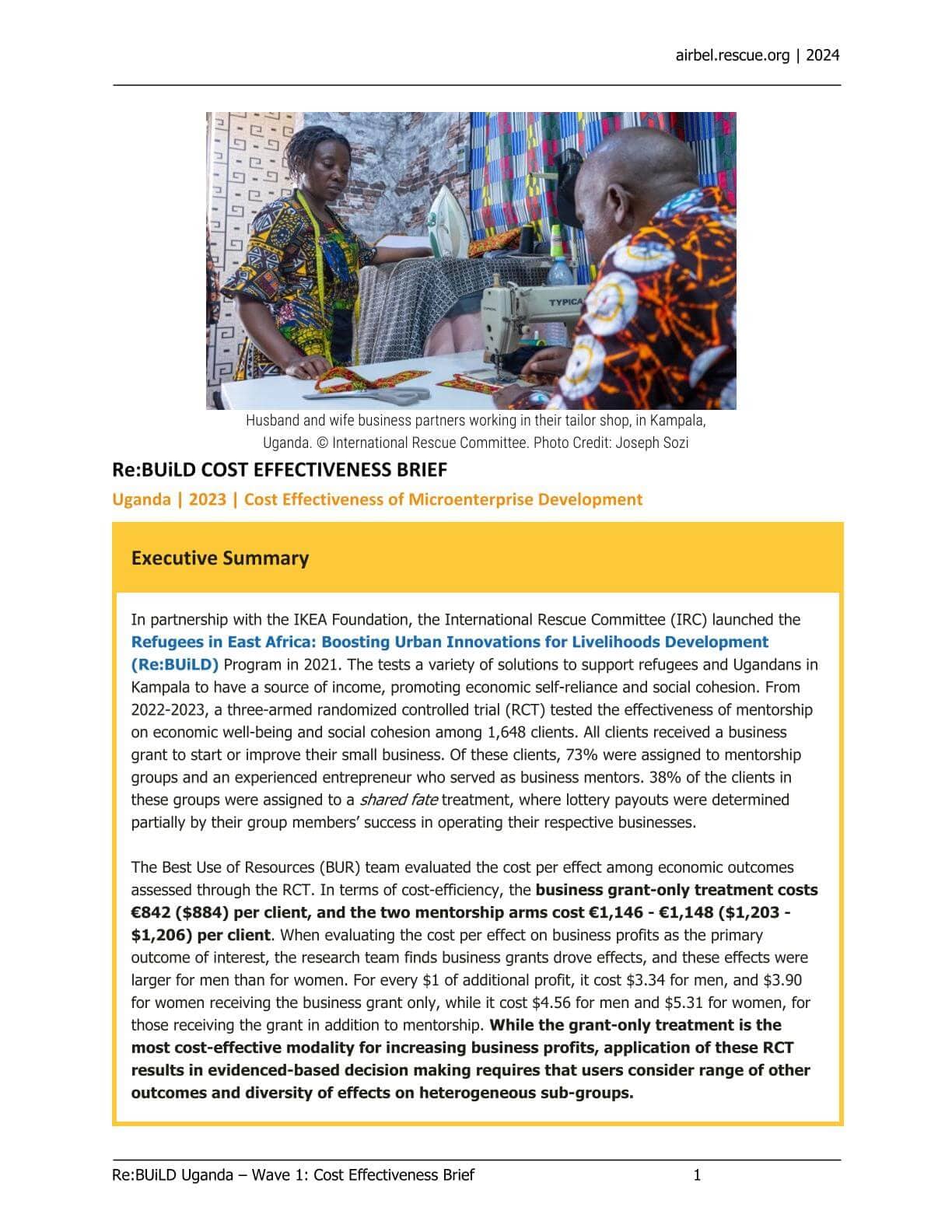
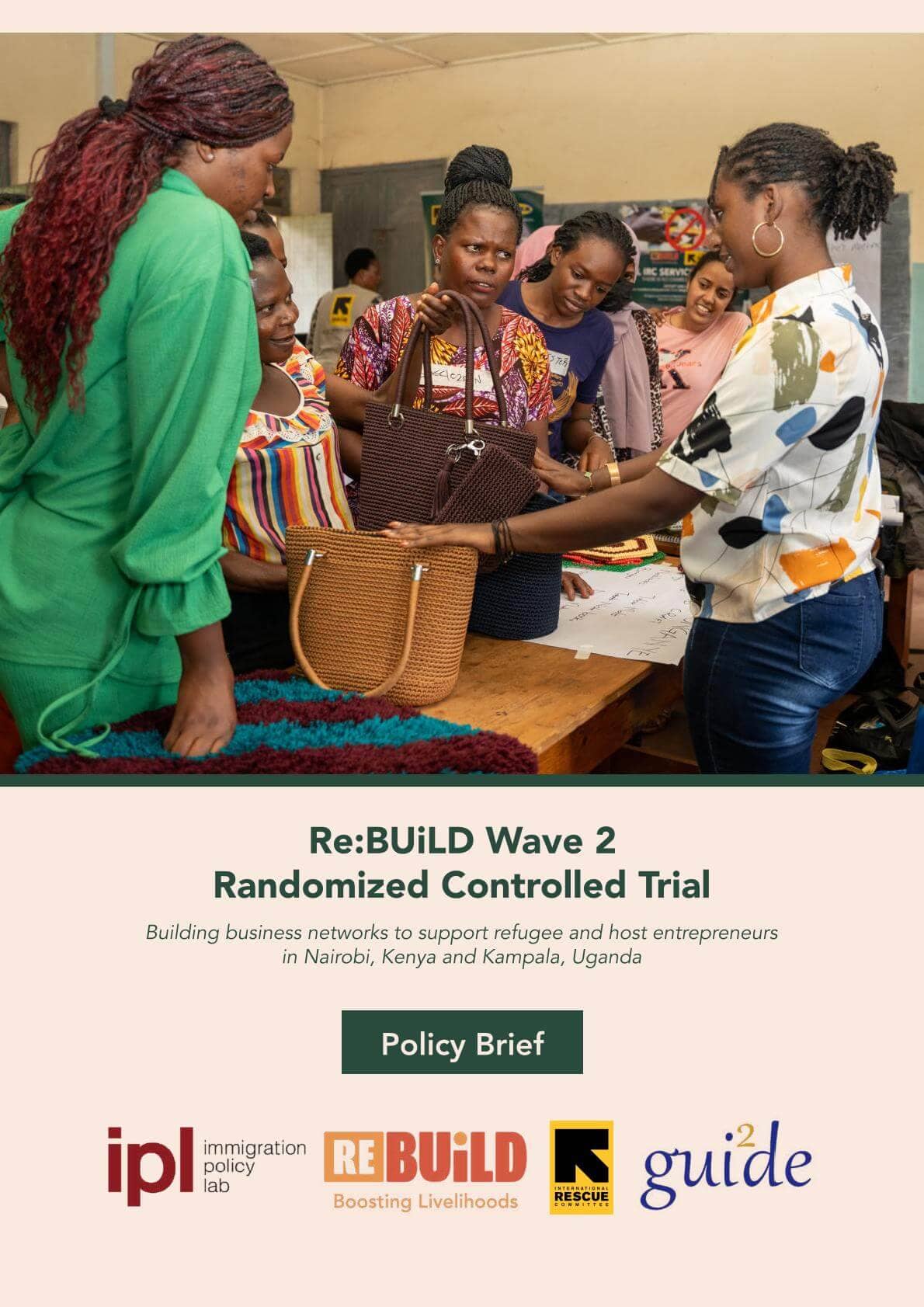
In partnership with the IKEA Foundation, the International Rescue Committee (IRC) launched the Refugees in East Africa: Boosting Urban Innovations for Livelihoods Development (Re:BUiLD) Program in 2021.The tests a variety of solutions to support refugees and Ugandans in Kampala to have a source of income, promoting economic self-reliance and social cohesion.
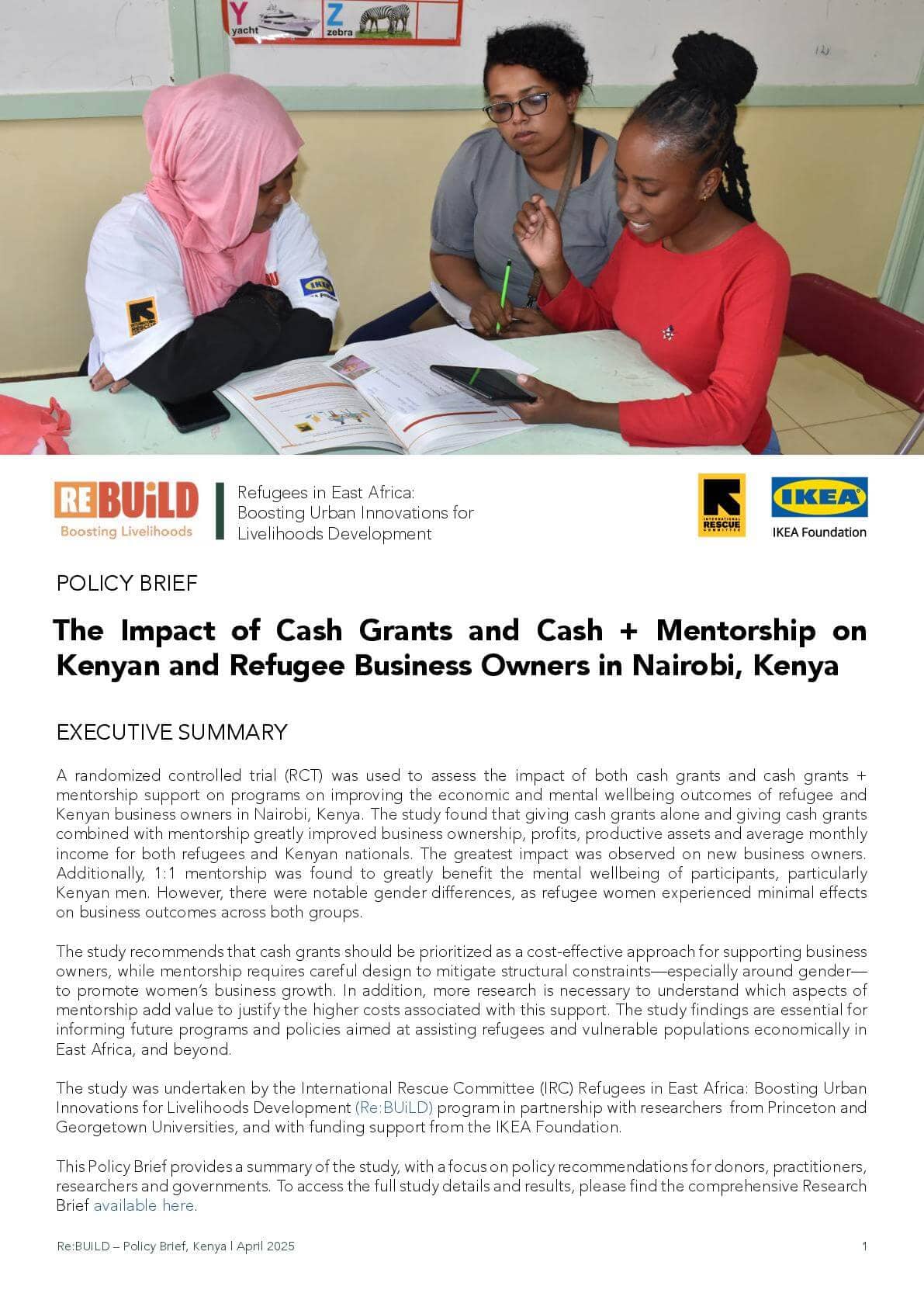
From 2022-2023, a three-armed randomized controlled trial (RCT) tested the effectiveness of mentorship on economic well-being and social cohesion among 1,648 clients. All clients received a business grant to start or improve their small business. Of these clients, 73% were assigned to mentorship groups and an experienced entrepreneur who served as business mentors. 38% of the clients in these groups were assigned to a shared fate treatment, where lottery payouts were determined partially by their group members’ success in operating their respective businesses.
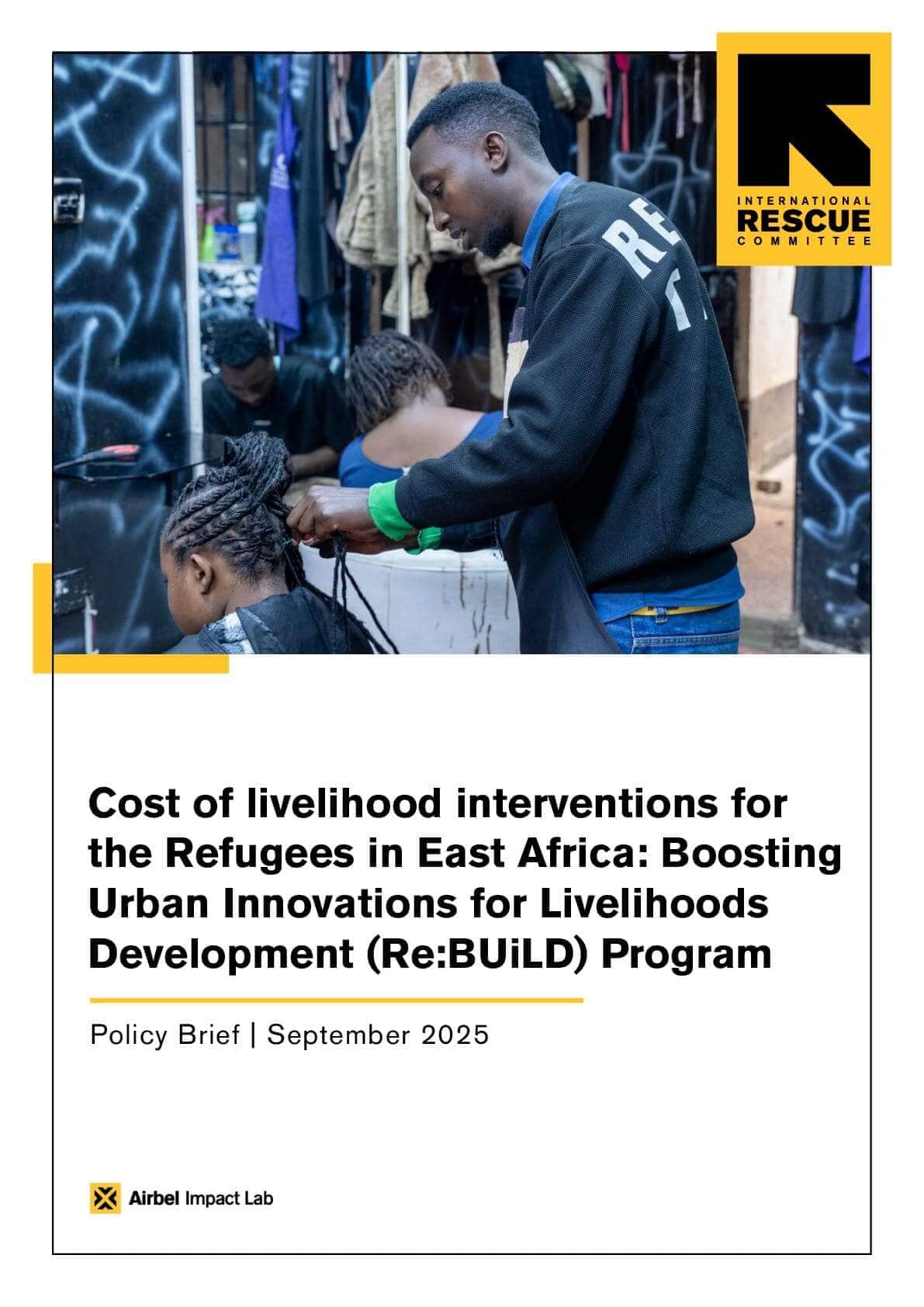
The Best Use of Resources (BUR) team evaluated the cost per effect among economic outcomes assessed through the RCT. In terms of cost-efficiency, the business grant-only treatment costs €842 ($884) per client, and the two mentorship arms cost €1,146 - €1,148 ($1,203 - $1,206) per client. When evaluating the cost per effect on business profits as the primary outcome of interest, the research team finds business grants drove effects, and these effects were larger for men than for women. For every $1 of additional profit, it cost $3.34 for men, and $3.90 for women receiving the business grant only, while it cost $4.56 for men and $5.31 for women, for those receiving the grant in addition to mentorship.
While the grant-only treatment is the most cost-effective modality for increasing business profits, application of these RCT results in evidenced-based decision making requires that users consider range of other outcomes and diversity of effects on heterogeneous sub-groups.