Strengthening Urban Refugee Resilience through Climate Smart Livelihoods Initiative in Nairobi and Kampala
Urban refugees and vulnerable host communities in East Africa face significant challenges accessing economic opportunities, threatening their livelihoods and economic stability. These challenges are increasingly exacerbated by climate-related risks, including flooding, heat stress, and environmental degradation.
Through the Re:BUiLD (Refugees in East Africa: Boosting Urban Innovations for Livelihoods Development) program, the International Rescue Committee (IRC), with support from the IKEA Foundation, strengthened climate resilience in Kampala, Uganda, and Nairobi, Kenya by integrating climate-smart approaches into urban livelihoods programming.
Working in partnership with city authorities, local businesses, government agencies, community-based organizations, and refugee-led organizations, Re:BUiLD recognized that improving economic inclusion and building climate resilience needed to go hand in hand. By promoting green and climate-resilient livelihoods, the program supported refugees and host community members to adapt to climate shocks, reduce environmental harm, and contribute to more sustainable urban economies.
Climate-Resilient Livelihoods in Kampala and Nairobi
In Kampala, Re:BUiLD worked in partnership with the Kampala Capital City Authority (KCCA) over five years to enhance refugee integration and service delivery, with a strong focus on access to livelihoods for refugees and vulnerable host communities. Building on this collaboration, Re:BUiLD, KCCA, and the Raising Gabdho Foundation (RGF) implemented a climate-smart livelihoods initiative that equipped participants with skills and resources to engage in environmentally sustainable income-generating activities, promoted social cohesion between the refugees and host communities while strengthening refugee inclusion through advocacy, policy engagement, and routine monitoring.
https://nilepost.co.ug/climate-resilient-pathways/197490
In Nairobi, Re:BUiLD operated in refugee-concentrated neighborhoods where climate risks such as flooding, poor waste management, and energy insecurity disproportionately affect low-income residents. The program supported refugees and host community youth to access climate-resilient livelihood pathways within the green economy, including renewable energy, waste recycling, circular economy enterprises, and climate-smart urban agriculture. These interventions responded directly to Nairobi’s climate challenges while creating viable employment and self-employment opportunities.
Across both cities, Re:BUiLD implemented activities through strong partnerships with city authorities, community-based organizations, and the private sector, ensuring that climate resilience efforts are locally grounded, inclusive, and market-driven.
Sustainable and Green Livelihood Pathways
Re:BUiLD promoted climate-smart livelihood pathways that were environmentally sustainable, economically viable, and accessible to urban refugees and host community members.
In Kampala, the program focused on:
-
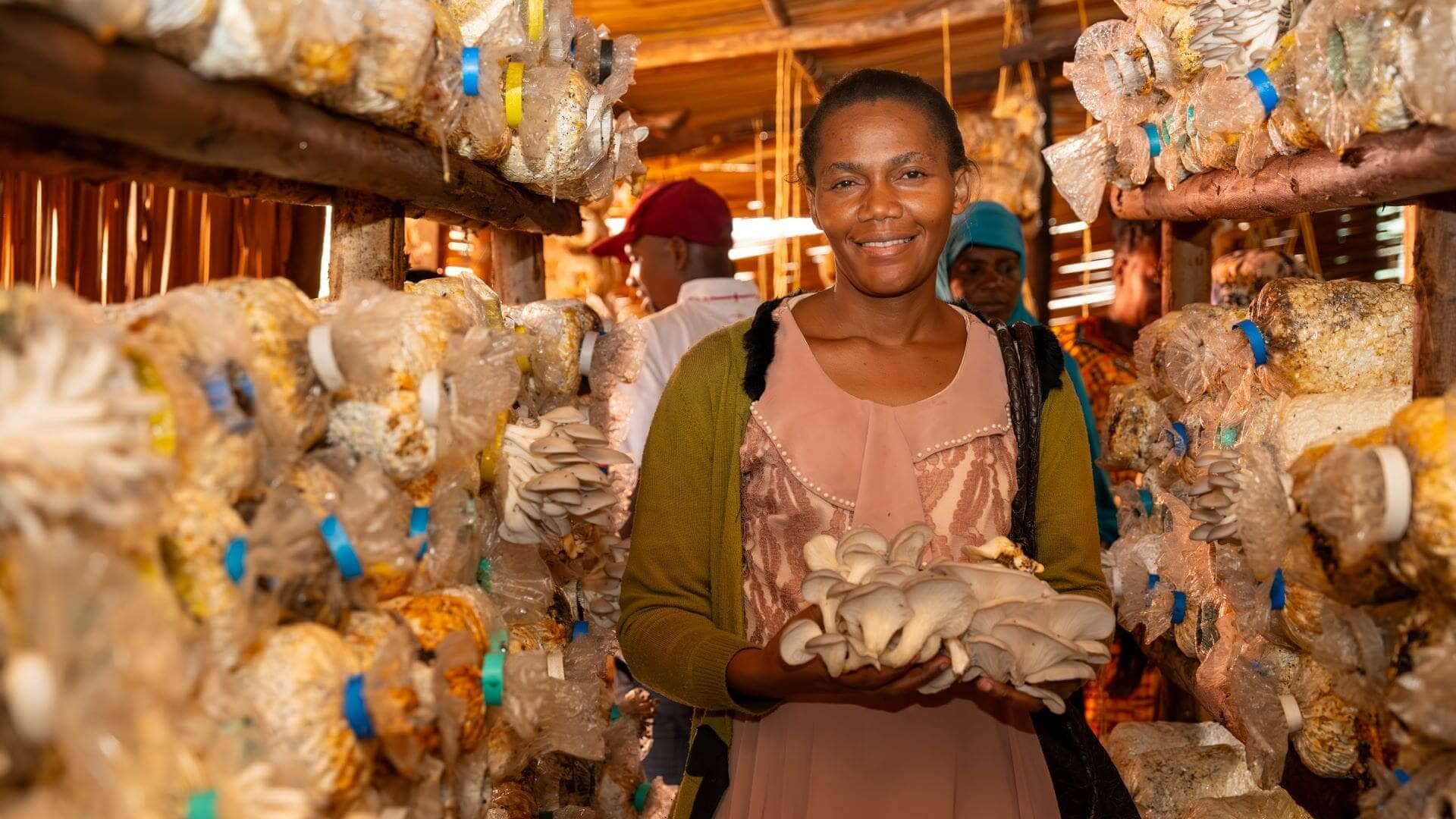
Mushroom cultivation, using agricultural waste such as coffee husks and cotton husks to produce a high-value, nutritious food product.
-
Black Soldier Fly (BSF) production, which converts organic waste into affordable, high-protein animal feed while reducing waste.
-
Briquette manufacturing, which repurposes biomass waste into cleaner, low-cost cooking fuel alternatives.
These pathways were selected based on the fact that they require minimal space to produce especially in a densely populated city like Kampala, generated relatively quick income since products like mushrooms were on high demand, and they are familiar with and culturally acceptable.
In Nairobi, Re:BUiLD prioritized green economy pathways including:
-
Solar energy installation and maintenance, expanding access to clean energy in underserved neighborhoods.
-
Electronic repair and e-waste recycling, turning discarded electronics into income while reducing environmental pollution.
-
Circular economic initiatives, such as textile upcycling, plastic and organic waste recycling, and sustainable urban production.
Together, these pathways demonstrated how climate action can be a driver of employment creation while contributing to cleaner, safer urban environments.
Targeting and Inclusion
Across Kampala and Nairobi, Re:BUiLD intentionally promoted inclusive participation, bringing together refugees and host community members to strengthen social cohesion and shared resilience.
-
In Kampala, the climate-smart livelihoods initiative targeted 500 participants, with 60% refugees and 40% host community members.
-
In Nairobi, Re:BUiLD reached 150 refugees and hosts through green livelihood services, with strong participation of women and youth.
This inclusive approach ensured that climate resilience efforts benefit entire urban communities, recognizing that climate shocks do not discriminate by status.
Climate Resilience Reach
Across both countries, Re:BUiLD reached a total of 1,008 individuals under the Climate Resilience portfolio:
| Kenya | Uganda | |
| Male | 102 | 395 |
| Female | 48 | 463 |
| Host | 123 | 387 |
| Refugees | 27 | 461 |
Early Results and Climate Resilience Outcomes
In Kampala, early results from climate-smart livelihood groups showed promising income potential. Mushroom production groups recorded cumulative sales of UGX 4,293,300 (€1,020), while briquette production groups recorded cumulative sales of UGX 2,083,000 (€495) who have gained access to local markets. Continuous mentorship was provided on governance, group dynamics, financial management, and sustainability.
Across the Climate Resilience portfolio, cumulative production and revenue demonstrated the economic viability of climate-smart livelihoods:
| Category | Cumulative Harvest (kg) | Cumulative Revenue (UGX) | Revenue (USD) |
| Mushroom | 596 | 4,293,300 (€1,020) | 1,206 |
| Black Soldier Fly | 35.1 | 140,400 (€33.3) | 39.4 |
| Briquette Production | 2,911 | 2,083,000 (€495) | 585.2 |
In Nairobi, program monitoring showed that a high proportion of participants trained in green livelihood pathways actively engaged in income-generating activities, either through employment or self-employment. These outcomes reflected the effectiveness of market-driven, climate-resilient livelihood approaches in dense urban settings.
Building Urban Climate Resilience
Through its work in both Kampala and Nairobi, Re:BUiLD has demonstrated that climate resilience could be strengthened by linking livelihoods to environmental sustainability practices. By supporting refugees and host communities to participate in green and climate-smart economic activities, the program reduced vulnerability to climate shocks while positioning urban refugees as active contributors to resilient, inclusive cities.
In the next phase, Re:BUiLD will continue supporting these groups by connecting members to financial services, training opportunities, and ongoing technical assistance, enabling them to grow their income‑generating activities and improve their livelihoods