
From 2021 to 2025, Re:BUiLD established a bold influencing agenda aimed at shaping policies, practices, and investments at national, regional, and global levels. The pillar sought to ensure that evidence and learning generated through the program translated into systemic change beyond direct service delivery.


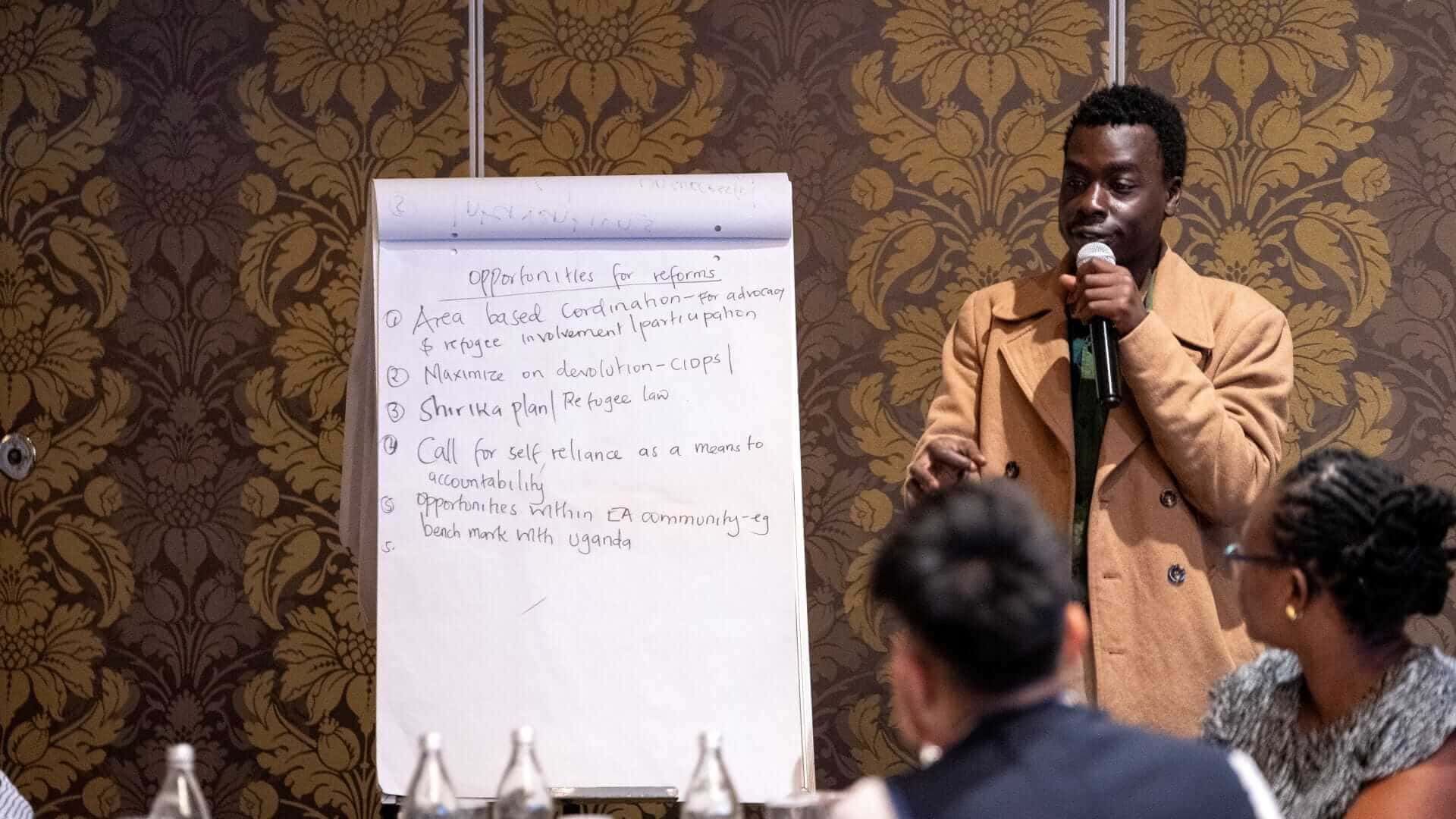
Re:BUiLD’s influence strategy was designed to extend its scope of change across Kampala and Nairobi, and beyond to other cities hosting refugees. The specific outcomes for our Influence and Adoption pillar focused on:
- Enabling policy change through national, regional and global policy makers.
- Sector change within the humanitarian and development community, who in turn must engage local private sector stakeholders.
- Using our evidence and learnings, we promote the value and effectiveness of urban refugee livelihoods programming.
Campaigns
Campaigns are tools employed by Re:BUiLD to influence policy and practice at a global, regional, national and community level. Through these campaigns, Re:BUiLD raises awareness, amplifies refugee voices, and drives systemic change to promote inclusion, rights, and access to services for refugees and host communities.
Securing Documentation Campaign for Refugees in Kenya and Uganda
While policies and digital registration systems for refugees are improving in Kenya and Uganda, many still face significant practical roadblocks. These challenges stop them from getting vital documents, such as the refugee ID cards, work and travel permits et al., which in turn limit their ability to access basic rights and services.
To address these gaps, Re:BUiLD launched an 8-month campaign titled "Securing Documentation Campaign for Refugees in Kenya and Uganda" with a focused effort to understand and address these documentation barriers. We are delving into the specific obstacles refugees face in Kenya and Uganda, explore innovative solutions to enhance documentation accessibility, and identify how international and national partners can effectively support governments et al. By gathering insights, and importantly, by listening to refugees' own stories, we aim to highlight pathways to better documentation access for refugees in Kenya and Uganda.
In August 2025, the International Rescue Committee, in collaboration with other agencies, convened a series of engagements in Nairobi and Kampala bringing together international, regional, and national legal and human rights practitioners, consultants, legal aid workers and advocates, refugees, community leaders and Refugee-Led Organizations (RLOs). These sessions provided a platform for participants to share firsthand experiences on refugee documentation, contribute personal stories, and helped identify practical solutions to propose to policymakers.
From these conversations, research findings were developed and shared with legal experts and human rights defenders. The goal is to support them in providing direct legal aid to refugees facing challenges in documentation processes, including appeals and legal recognition.
The insights will inform the advocacy efforts aimed at pushing for policy and legislative reforms by governments and regional bodies to simplify documentation processes. Below are the key resources available:
- Highlights from the RLO conversations in Kampala and Nairobi
- Discussions and outcomes report from the Advancing Freedom of Movement for Forcibly Displaced Persons
- The Re:BUiLD Securing Documentation Campaign (2025) Consolidated Report
The campaign is ongoing. We are now focusing on engaging policymakers and the media to spotlight potential solutions and progress, showcase contributions from policymakers and relevant institutions while also holding them accountable by tracking their commitments and recommended actions.
Decent Work Campaign
In 2023, Re:BUiLD conducted a six-month long campaign on ‘Decent Work’ to promote refugees’ access to decent work in Nairobi and Kampala. The campaign sought to strengthen awareness among governments, employers, private sector actors, humanitarian agencies, and development partners about the regulatory frameworks governing refugee employment and the practical barriers limiting refugees’ access to decent work.
Through stakeholder dialogues, public engagement, and evidence dissemination, the Decent Work campaign aimed to shift perceptions, encouraging a transition from viewing refugees as economic burdens to recognizing them as contributors to innovation, productivity, and local economic growth.
Following the campaign, Re:BUiLD consolidated the insights gathered into a policy brief titled “A Call for Decent Work Opportunities for Refugees Living in Nairobi and Kampala.” The brief synthesized campaign findings and outlined actionable recommendations, including:
- Streamlining and expediting processes for issuing refugee identification documents and work permits.
- Reinforcing labor protections to ensure equal rights and workplace safeguards.
- Increasing employer awareness of refugees’ legal right to work.
- Expanding access to skills training, apprenticeships, and on-the-job learning opportunities.
- Strengthening coordination between governments, NGOs, and the private sector to reduce structural barriers.
The policy brief served as a catalyst for continued dialogue and advocacy, positioning decent work not only as a labor issue but as a foundation for economic inclusion, resilience, and social cohesion in urban settings.
Cost-of-Living Crisis Campaign
In 2022, Re:BUiLD conducted a campaign on the cost-of-living crisis for urban communities in Kampala and Nairobi which climaxed with the launch of a policy brief in October of the same year. The campaign culminated in the launch of a policy brief in October 2022, titled Cost of Living Crisis and Urban Refugees in East Africa.
The brief was launched during the Intergovernmental Authority on Development (IGAD) conference on the Kampala Declaration held in Nairobi calling on donors and host governments to provide humanitarian assistance and national social protection on the basis of a human right without discrimination based on refugee status and location. Globally, the Re:BUiLD brief was presented at the UNHCR’s dialogue on protection challenges in Geneva.